
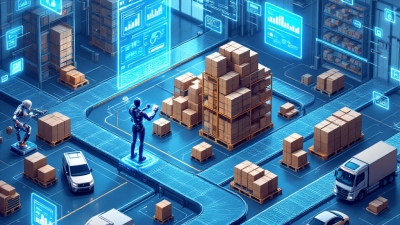
AI Agents in Supply Chain Management: Enhancing Efficiency and Resilience
In today’s fast-paced global economy, supply chain management has become one of the most critical functions for businesses seeking a competitive edge. Advanced technologies, particularly AI agents, are reshaping traditional practices, paving the way for unprecedented levels of efficiency, accuracy, and resilience. This transformation is not only revolutionizing logistics but also providing robust strategies to tackle disruptions head-on. In this comprehensive post, we delve deep into how AI agents are modernizing supply chain management and why companies must embrace these innovations now.
─────────────────────────────
Introduction to AI Agents in Supply Chain Management
The concept of AI agents in supply chains extends far beyond automation. It encompasses sophisticated technologies capable of interpreting vast amounts of data, learning from historical trends, and making real-time decisions. These agents work in conjunction with human expertise to predict market demands, optimize routes, manage warehouse operations, and even foresee potential bottlenecks. As the digital transformation wave sweeps across industries, supply chains are increasingly leveraging AI to gain actionable insights and foster agility. According to a Gitnux Market Data Report (2025), up to 85% of supply chain companies are projected to adopt AI technology by 2025. This rapid adoption underscores the pivotal role AI plays in shaping modern supply chain strategies.
─────────────────────────────
The Current Challenges in Supply Chain Management
Traditional supply chains, while reliable in many respects, grapple with several challenges. These include unpredictable demand fluctuations, inventory inaccuracies, inefficient transportation networks, and equipment downtime. The complexities are compounded by global events such as natural disasters or geopolitical uncertainties, which can cause significant disruptions. Moreover, manual processes and siloed data systems often hinder responsiveness and lead to inefficiencies. The rising consumer expectations for faster deliveries and personalized services add another layer of pressure on already strained systems. In light of these challenges, businesses are increasingly turning to AI-driven solutions. With capabilities such as predictive analytics and real-time monitoring, AI not only anticipates challenges but also offers strategies for overcoming them, enhancing both operational efficiency and resilience.
─────────────────────────────
How AI Agents Optimize Logistics
Logistics remains a critical, yet challenging, component of supply chain management. AI agents have emerged as transformative tools in optimizing various logistics aspects. With advanced route optimization algorithms, AI can analyze traffic patterns, weather conditions, and historical delivery data to propose the fastest and most cost-effective routes. This has led to a reported reduction in transportation costs by up to 15% as highlighted by the Gitnux Market Data Report (2025). Additionally, AI-powered warehouse automation streamlines inventory management by reducing human error and cutting operational costs by an impressive 25-45%. Through intelligent sensors and robotics, warehouses are becoming more responsive, and tasks like sorting, packing, and inventory tracking are executed with enhanced precision and efficiency. This digital enhancement not only shortens delivery times but also fosters a more resilient supply chain capable of adapting to market demands.
─────────────────────────────
Predicting Demand Fluctuations Using AI
Accurate demand forecasting lies at the heart of effective supply chain management. Traditional forecasting methods, often reliant on historical sales data, are frequently unable to capture sudden shifts in consumer behavior or market conditions. AI agents, however, leverage a multitude of data sources—including social media trends, economic indicators, and real-time market analytics—to predict demand fluctuations with remarkable accuracy. Recent statistics show that AI-driven demand forecasting can improve forecast accuracy by up to 50% and, in some cases, even up to 65% when employing demand sensing technologies (Gitnux Market Data Report (2025)). This increased precision allows businesses to manage inventory more effectively, reduce overstock or stockout situations, and ultimately deliver higher levels of customer satisfaction. The dynamic ability of AI agents to continuously learn and adjust predictions based on real-time data ensures that supply chains remain both agile and responsive.
─────────────────────────────
Mitigating Supply Chain Disruptions with AI
Disruptions can be costly, and their unpredictable nature often leaves companies scrambling to adapt. AI agents play a crucial role in mitigating these risks through proactive monitoring and predictive analytics. By continuously analyzing operational data and external variables, AI can identify potential issues before they escalate. For instance, predictive analytics powered by AI have been shown to reduce supply chain disruptions by approximately 30% (Gitnux Market Data Report (2025)). Furthermore, AI-driven predictive maintenance is capable of reducing equipment failure downtime by 40-50%, ensuring that critical infrastructure remains operational and disruptions are minimized (Gitnux Market Data Report (2025)). By foreseeing issues and streamlining corrective actions, AI agents not only mitigate potential risks but also fortify the entire supply chain against unexpected challenges.
─────────────────────────────
Case Studies: Real-World Applications and Success Stories
Real-world implementations of AI agents in supply chain management are both inspiring and instructive. Global retail giants have successfully integrated AI-driven systems to optimize inventory levels, reduce logistics costs, and enhance overall customer service. For example, companies using AI-powered last-mile delivery solutions have reported efficiency increases ranging between 30-50% (Gitnux Market Data Report (2025)). Additionally, several manufacturers have demonstrated that streamlined order cycles—achieving reductions of 10-15%—are attainable when AI tools automate complex scheduling tasks and integrate supply chain data (ZipDo Education Reports (2024)). These case studies illustrate not only the cost-saving benefits of AI but also the dramatic improvements in responsiveness and overall operational excellence that can be achieved across varied industries.
─────────────────────────────
The Future of AI in Supply Chain Management
As technological advancements continue to accelerate, the role of AI in supply chain management is expected to expand even further. Future developments are likely to focus on deeper integration between AI systems and emerging technologies such as blockchain, IoT, and advanced robotics. These integrations promise to deliver even greater transparency, traceability, and security within supply chains, fostering trust among business partners and consumers alike. Moreover, as AI algorithms become more sophisticated, businesses can anticipate not only enhanced predictive capabilities but also a more unified, end-to-end supply chain management system that reduces manual interventions and promotes operational excellence. With projections indicating a major shift towards AI adoption—85% of supply chain companies by 2025 (Gitnux Market Data Report (2025))—the future of AI in supply chains is undeniably robust and transformative.
─────────────────────────────
Key Takeaways and Implementation Strategies for Businesses
For companies considering the adoption of AI in their supply chains, several critical takeaways emerge from the current landscape. First, the move towards AI is not simply about automation but about creating agile, responsive systems that can adapt to market changes quickly. Improved forecast accuracy, streamlined logistics, and proactive disruption management are some of the clear benefits highlighted by modern AI applications. Second, integration is key. AI must be embedded within a broader digital strategy that includes real-time data analytics, IoT sensors, and seamless communication channels across all supply chain facets. Finally, companies must prioritize continuous learning and evolution. As AI technologies mature, businesses that invest in training, integration, and incremental enhancements will stay ahead of the curve, ensuring sustained competitive advantages.
For successful implementation, businesses should start by identifying key pain points within their supply chain operations and then develop a phased AI adoption roadmap. Partnering with technology experts and leveraging platforms that offer modular and scalable solutions—like those enabled by Microsoft Power Platform—can further facilitate a smooth transition. The long-term benefits, ranging from significant cost savings to enhanced market resilience, make a compelling case for immediate action.
─────────────────────────────
Conclusion
AI agents are not just a technological novelty; they represent a fundamental shift in how supply chains are managed. By enhancing operational efficiency, refining demand forecasts, and proactively mitigating disruptions, these systems empower businesses to build more resilient and adaptive supply chains. As companies increasingly embrace AI—from optimizing logistics to predictive maintenance—the industry is set on a path toward improved service delivery and sustained growth. For business leaders and technical specialists alike, understanding and investing in AI-driven supply chain management is no longer optional, but essential for future success.