
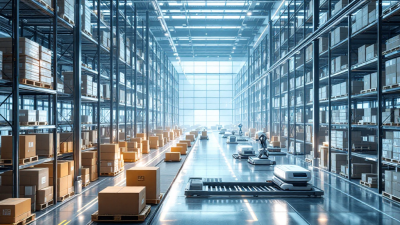
AI Agents in Supply Chain Management: Enhancing Efficiency and Resilience
In today’s rapidly evolving global market, supply chains have become the backbone of successful business operations. With the increasing complexity of logistics and the need for swift adaptation to market demands, companies are turning to AI agents as a transformative solution. These intelligent systems optimize logistics, predict demand fluctuations, and mitigate disruptions—driving efficiencies and resilience in supply chain operations. In this post, we will explore how AI agents are redefining supply chain management, review real-world examples, and outline strategies to overcome implementation challenges.
────────────────────────────────────────
Introduction to AI in Supply Chain Management
The infusion of artificial intelligence in supply chain management represents a paradigm shift from traditional, reactive approaches to proactive, agile operations. As businesses strive to minimize operational costs while maximizing service reliability, AI becomes a compelling ally. According to recent data from the Gitnux Market Data Report (2025), 85% of supply chain companies are currently adopting or planning to adopt AI technology by 2025. This trend is fueled by the promise of streamlined processes—from inventory management and order fulfillment to transportation and warehouse operations.
Moreover, AI-powered systems are not just about automation but also about unlocking insights hidden within massive datasets. By leveraging advanced algorithms, these agents can analyze historical trends, seasonal fluctuations, and even unexpected market changes to create a dynamic and responsive supply chain strategy. In doing so, AI is redefining risk management, promoting sustainability, and better aligning supply and demand.
────────────────────────────────────────
The Role of AI Agents in Logistics Optimization
Logistics is a critical component of supply chain management that has historically been associated with high operational costs and complexity. AI agents are now at the forefront of transforming this domain through intelligent route optimization, dynamic scheduling, and real-time tracking. With the help of machine learning algorithms, companies can now predict the most efficient routes, reducing both transit times and fuel consumption.
For instance, AI-enabled route optimization has been reported to reduce transportation costs by an average of 12% (WiFi Talents Report, 2025). The system continuously evaluates traffic conditions, weather data, and vehicle performance, ensuring that the best possible routes are chosen. This not only enhances the reliability of delivery schedules but also minimizes environmental impact—a crucial benefit in an era focused on sustainable business practices. Additionally, companies leveraging AI in logistics have reported a reduction in lead times by 20-25%, directly translating to improved customer satisfaction and competitive advantage.
────────────────────────────────────────
Predictive Demand Forecasting with AI
Accurately predicting customer demand is paramount for managing inventory and reducing the risk of stockouts or overstocking. Traditional forecasting methods often fall short due to their inability to account for market volatility. However, AI agents are equipped to handle large volumes of data—ranging from historical sales trends to real-time market indicators. This results in a more refined and agile forecasting system.
Research indicates that AI-driven demand forecasting can improve prediction accuracy by up to 50%, as per the ZipDo Education Reports (2024). Even more impressive, some systems are achieving forecast accuracy improvements of up to 70% in volatile markets (WiFi Talents Report, 2025). Such precision allows companies to adjust production, inventory levels, and distribution plans accordingly, resulting in efficient stock management, reduced wastage, and substantial savings in operating costs. By aligning supply chain operations more closely with consumer behavior, organizations can secure a strategic advantage in increasingly competitive markets.
────────────────────────────────────────
Case Studies: Real-World Applications and Success Stories
The theoretical benefits of AI in supply chain management have been vividly demonstrated through a number of successful implementations. Leading enterprises across various industries have harnessed the power of AI to decode complex logistical challenges and drive measurable improvements.
For example, several multinational companies have successfully implemented AI-powered warehouse automation, reporting operational cost reductions ranging between 25-45% (Gitnux Market Data Report, 2025). These systems automate inventory tracking and order fulfillment stages, ensuring that the entire warehousing process is not only faster but also far more accurate. In logistics, firms utilizing AI for route optimization have seen a clear decrease in transportation costs, as highlighted earlier, which collectively contributes to a leaner and more responsive supply chain.
Further, organizations focusing on predictive analytics have reduced stock-outs by up to 40%, ensuring that customer demand is met consistently (WiFi Talents Report, 2025). These case studies underscore the transformative potential of AI, illustrating that with the right investment and strategy, businesses can revolutionize even the most entrenched supply chain structures.
────────────────────────────────────────
Challenges in AI Implementation and Overcoming Them
Despite the transformative benefits, the journey towards full AI integration in supply chain management is not without its challenges. Common hurdles include data silos, integration of legacy systems, cybersecurity concerns, and a shortage of skilled professionals. For many organizations, consolidating data from disparate sources to feed into an AI system is a significant first step, requiring robust IT infrastructure and clear data governance policies.
Transitioning from legacy systems also requires careful change management. Companies must ensure that there is alignment between new AI solutions and existing business processes to avoid operational disruptions. Investing in training and skill development is essential, as automation and AI require a workforce that is capable of managing and interfacing with advanced technologies.
Moreover, cybersecurity remains a top priority as supply chains become more interconnected. Mitigating risks associated with data breaches and ensuring secure integration practices are critical. Overcoming these challenges involves both strategic planning and incremental implementation. Businesses are advised to start small with pilot projects, which allow them to gauge success rates before scaling AI solutions across the board. This approach can create a smoother transition, yielding long-term benefits without compromising current operations.
────────────────────────────────────────
The Future of Supply Chains: AI-Driven Resilience and Efficiency
Looking ahead, the role of AI in supply chain management is bound to expand and evolve. Future supply chains will likely be characterized by an unprecedented level of integration between digital technologies and physical operations. AI agents will not only facilitate real-time decision-making but will also enable entirely new business models that emphasize predictive analytics and automated response systems.
Trends suggest that AI will further enhance supply chain resilience, making them better equipped to handle disruptions—whether they stem from geopolitical upheaval, natural disasters, or global pandemics. By continuously analyzing risk factors and monitoring global trends, AI systems can provide actionable insights that help businesses prepare for and respond to unforeseen events. Additionally, AI-driven optimizations contribute to sustainability efforts by reducing environmental impacts through smarter resource allocation and reduced waste (ZipDo Education Reports, 2024).
Organizations that commit to embracing AI in their supply chains are positioning themselves at the forefront of innovation. The cumulative data supports the idea that investments in AI and automation can lead to a 30% reduction in supply chain costs while simultaneously boosting delivery performance by up to 87% (ZipDo Education Reports, 2024). This bold convergence of efficiency and resilience is set to redefine market competitiveness over the coming years.
────────────────────────────────────────
Conclusion: Embracing AI for a Smarter Supply Chain
AI agents are no longer a futuristic vision; they are a current reality, reshaping supply chain management across industries. The integration of AI technologies offers tangible benefits—ranging from significant cost reductions and enhanced forecasting accuracy to improved logistics and delivery performance. While challenges in implementation remain, the strategic advantages afforded by AI in mitigating risk and adapting to market dynamics are undeniable.
For business leaders and supply chain professionals, now is the time to embrace AI-driven solutions. By leveraging advanced predictive analytics, optimizing logistics, and ensuring operational efficiency, companies can not only generate cost savings—between 5-15% in operating costs and even further savings in transportation and warehouse management—but also build a more resilient, future-proof supply chain capable of thriving in uncertainty.
In the era of digital transformation, the fusion of AI and supply chain management paves the way for smarter, more agile operations. Businesses that invest in these technologies today will reap the rewards of streamlined processes, superior customer satisfaction, and sustainable growth for years to come.
Embrace AI, transform your supply chain, and secure your competitive edge in this dynamic market landscape.