
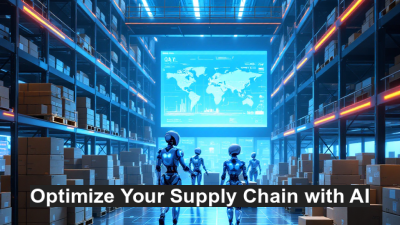
AI Agents in Logistics: Enhancing Supply Chain Efficiency
Introduction: The Role of AI in Modern Logistics
In today’s fast-paced global economy, the logistics and supply chain industry is under immense pressure to deliver goods faster, more reliably, and at lower costs. Enter Artificial Intelligence (AI) agents—a transformative force that is reshaping how companies manage the intricate web of supply chain operations. AI’s ability to analyze vast datasets in real time, predict market fluctuations, and offer actionable insights is revolutionizing the way goods are shipped, stored, and delivered. From optimizing transport routes to automating inventory management, AI is becoming the backbone of modern logistics, driving efficiency and sustainability. Leading industry players are increasingly embracing AI to navigate the complexities of global supply chains, ensuring that businesses remain agile and competitive.
Optimizing Supply Chain Operations: AI at Work
Supply chain operations have traditionally been characterized by manual processes, fragmented data, and reactive decision-making. Today, AI agents are transforming these systems into proactive, highly efficient, and resilient networks. One of the primary benefits of AI in logistics is predictive analytics. By processing historical data and real-time information, AI systems can forecast demand fluctuations, identify inventory gaps, and even anticipate potential disruptions due to factors such as weather or geopolitical events. This capability helps companies to optimize stock levels, reduce waste, and ensure that products are available where and when they’re needed.
For example, advanced machine learning models are capable of recognizing patterns that human operators might miss, enabling logistics managers to streamline shipping schedules and warehouse operations. By integrating technologies such as RFID tags, GPS trackers, and Transport Management Systems with AI-driven analytics, businesses can achieve end-to-end visibility of their supply chain—an essential ingredient for maintaining operational excellence (Financial Times).
Enhancing Route Planning with AI Algorithms
One of the most visible impacts of AI in logistics is its role in enhancing route planning. Traditional route planning often involved static maps and manual calculations that could not accommodate real-time conditions. Today, AI algorithms have the capability to dynamically adjust to changing variables such as traffic conditions, weather patterns, road closures, and even vehicle performance issues. This results in the most efficient and cost-effective routes being selected, reducing fuel consumption, emissions, and transit times.
AI-powered route planning platforms use vast amounts of real-time data to simulate and optimize delivery scenarios. These systems not only determine the quickest routes but also consider the economic impact of each decision, such as the potential savings from reduced fuel usage or minimized labor hours. Companies using these intelligent systems see significant benefits in terms of efficiency and sustainability. The combination of machine learning, big data, and IoT (Internet of Things) technologies is setting new industry standards for faster and more reliable logistics operations.
Streamlining Inventory Management with Smart AI Agents
Inventory management is often the lifeblood of any logistics operation. Maintaining the right balance of stock is critical—not only to meet customer demand but also to avoid the costs associated with overstocking or stockouts. AI agents have transformed this domain by providing a level of precision previously unattainable with manual systems. By continuously monitoring inventory levels, analyzing historical sales data, and forecasting future consumer trends, AI agents can automatically trigger reordering processes and adjust inventory distribution across warehouses.
CEVA Logistics, the logistics arm of global shipping leader CMA CGM, is an excellent example of this transformation. Leveraging Google’s advanced AI technology, CEVA has adopted smart warehouse management tools across its 10.3 million square meters of warehouse space. This integration helps anticipate demand and streamline operations, ensuring that the right amount of stock is available at the right time and place (PR Newswire).
Case Study: CMA CGM and Google’s AI Partnership
A standout real-world example of AI integration in logistics is the strategic partnership between CMA CGM and Google. Announced in July 2024, this collaboration is a testament to how industry giants are willing to invest in cutting-edge technology to stay ahead of the curve. The partnership focuses on optimizing various aspects of logistics including vessel routes, container handling, and comprehensive inventory management.
For CMA CGM, the adoption of AI is not just an incremental improvement but a complete overhaul of its operational strategy. By integrating AI into their global shipping network, they aim to enhance the efficiency and reliability of deliveries while reducing operational costs and carbon emissions. Furthermore, CEVA Logistics, as part of this ecosystem, uses Google’s AI technology to improve forecasting accuracy and streamline warehouse processes, which in turn supports better volume and demand planning (PR Newswire). This case study not only highlights AI’s transformative impact but also serves as an inspiring blueprint for other organizations looking to integrate AI into their supply chains.
The Benefits: Faster Delivery, Cost Reduction, and Increased Efficiency
The integration of AI agents in logistics brings a host of tangible benefits. Faster delivery times are achieved through optimized route planning and predictive maintenance, ensuring that vehicles and vessels are always operating at peak performance. Operational costs are reduced thanks to more efficient resource allocation, less fuel consumption, and minimization of errors caused by manual intervention.
Real-time visibility into every aspect of the supply chain enhances trust and reliability. AI enables logistics companies to monitor shipments continuously, provide accurate delivery estimates, and proactively manage any disruptions. Beyond the operational gains, AI also contributes significantly to sustainability efforts. By optimizing routes and reducing idle time, companies lower their carbon footprints—a critical factor in today’s environmentally conscious market.
Furthermore, with automated warehousing and improved supplier management, companies can focus more on strategic growth rather than day-to-day operations. Advanced AI systems even extend their benefits to customer service by integrating chatbots and virtual assistants that handle inquiries and provide real-time updates (Debut Infotech).
Challenges and Solutions for Integrating AI in Logistics
While the benefits of AI in logistics are manifold, its integration is not without challenges. One of the primary obstacles is the need for a robust and unified data infrastructure. Many logistics companies struggle with siloed data systems that impede the effective implementation of AI solutions. Overcoming this requires significant investments in data consolidation and cloud-based technologies.
Another challenge is the need for skilled personnel who can manage, interpret, and act upon AI-driven insights. Training and hiring talent in data science and machine learning is essential to fully harness the potential of AI systems. Additionally, concerns regarding cybersecurity, data privacy, and potential job displacement often arise. However, these challenges can be addressed through strategic planning, comprehensive training programs, and by framing AI as a tool that augments human capabilities rather than replacing them.
To tackle these issues, many companies are partnering with tech giants and specialized AI firms. For instance, CMA CGM’s collaboration with Google not only brings advanced technology but also ensures that the necessary expertise is in place to navigate potential challenges (Reuters). Such partnerships demonstrate that while the road to AI integration may be complex, the solutions are well within reach for companies willing to invest in the future of logistics.
Future Trends: What’s Next for AI in the Logistics Industry
The journey of AI in logistics is just beginning, with several promising trends on the horizon poised to further revolutionize the industry. One of the most exciting developments is the increasing integration of AI with robotics and automation. FedEx, for example, has recently invested in AI robotics company Nimble to enhance its supply chain operations, particularly in its fulfillment unit, which supports small and medium-sized businesses (Reuters).
Another key trend is the evolution of smart transportation systems that will utilize AI to manage interconnected networks of autonomous vehicles, drones, and other delivery mediums. This will not only reduce human error but will also pave the way for faster and more reliable delivery systems worldwide. Furthermore, the growing trend towards sustainability is likely to drive investments in green AI technologies that focus on reducing emissions and improving fuel efficiency.
Advancements in AI-powered data analytics will continue to refine and personalize supply chain strategies, enabling companies to respond even more effectively to market changes. As these technologies mature, their adoption will become more widespread, setting new standards for efficiency, cost reduction, and operational excellence in the logistics industry.
Conclusion: Making the Most of AI in Your Supply Chain
The integration of AI agents in logistics stands as a transformative development in modern supply chain management. From optimizing inventory and planning routes to fostering robust partnerships like that of CMA CGM and Google, AI is proving indispensable across all levels of the logistics sector. The benefits—faster deliveries, reduced costs, and greater transparency—are clear, but the path to full integration requires addressing data, skill gaps, and cybersecurity challenges.
For businesses ready to embrace the future, investing in AI is not merely an option; it is a strategic imperative. By leveraging the power of AI agents, companies can not only stay ahead in a competitive global market but also lay the foundation for a sustainable and efficient logistics network that meets the demands of tomorrow. The future of logistics is already unfolding, and those who commit to innovation today will be the trailblazers of tomorrow’s supply chain revolution.