
AI Agents in Logistics: Streamlining Supply Chains for the Future
Introduction: The Current Landscape of Logistics and Challenges
The logistics industry today stands at the crossroads of innovation and operational complexity. Global supply chains must navigate increasing consumer expectations, fluctuating market demands, and intricate regulatory environments—all while managing cost efficiency and sustainability. Traditional logistics models, often burdened by manual scheduling and reactive maintenance, are under constant pressure to deliver faster, smarter, and more reliable services. These challenges have set the stage for a transformative technological shift: the integration of AI agents that not only optimize routing and warehousing but also enable real-time decision-making across the entire supply chain. As industries look for ways to remain competitive, AI is emerging as a critical tool in overcoming logistics hurdles and driving future success.
Role of AI in Optimizing Route Planning
One of the most significant contributions of AI in logistics is the optimization of route planning. Modern algorithms use complex datasets—ranging from traffic patterns and weather conditions to real-time delivery constraints—to determine the most efficient pathways. By leveraging machine learning and generative AI, companies can dynamically recalibrate routes to avoid congestion and delays, thereby reducing fuel consumption, emissions, and operational costs. For instance, Amazon’s innovative approach employs generative AI mapping tools that enhance delivery drivers’ navigation, even in complex locations. This technology offers hands-free, real-time navigation assistance, fundamentally changing how logistics operations respond to on-the-ground challenges. Such advancements not only streamline vehicle movements but also support broader sustainability goals by reducing environmental impact. Insights on these trends have been well-documented by industry leaders, including comprehensive coverage by Reuters.
Case Study: Amazon’s Use of AI in Route Optimization
Amazon stands at the forefront of AI-driven logistics innovation. The company’s investment in advanced mapping tools and predictive analytics reflects its commitment to efficient and customer-centric operations. By integrating AI agents into its route planning systems, Amazon can predict delivery patterns, optimize route selection, and mitigate unexpected delays. The dynamic algorithms employed not only facilitate smoother last-mile delivery but also enable the seamless coordination of multiple delivery vehicles operating in high-density urban areas. Additionally, AI-driven predictive maintenance—another pillar of Amazon’s strategy—ensures that vehicles and robotics are serviced proactively, thereby reducing downtime and increasing delivery reliability. Reports from Reuters highlight how these sophisticated tools contribute to improved operational efficiency, underscoring the transformative impact of AI on logistics infrastructure.
Enhancing Warehouse Automation with AI Agents
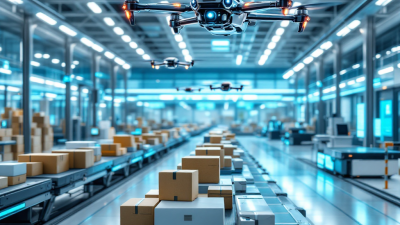
Warehouse operations form the backbone of any supply chain, handling the storage, retrieval, and shipment of goods. AI agents have revolutionized these operations by introducing automation that enhances speed, accuracy, and safety. Autonomous robots now navigate vast warehouse spaces, tasked with everything from unloading trailers to retrieving parts on command. These agents operate around the clock, minimizing human error and dramatically boosting throughput during peak demand periods. For example, Amazon’s AI-driven warehouse robots have been instrumental in streamlining operations and reducing waste. By harnessing reinforcement learning and real-time data analytics, these systems continuously optimize operational workflows. Deep dives into these innovations reveal that integrating AI in warehousing not only increases productivity but also prepares logistics centers for future scalability and complexity.
Real-World Example: DHL’s AI-Driven Warehouse Automation
DHL, a global leader in logistics, has embraced AI-powered automation to further refine its warehouse operations, particularly in parcel sorting. With the implementation of AI-powered robotic arms, DHL Express Asia Pacific is now capable of sorting over 1,000 small parcels per hour. Such advancements are critical in maintaining high service levels in a market where speed and precision are paramount. The use of AI in this context allows for near-perfect accuracy, reducing shipment errors and ensuring faster processing times. Insights shared by DHL demonstrate that these innovations are not just incremental improvements but represent a fundamental shift toward autonomous operations that set new performance benchmarks in the industry.
Improvements in Real-Time Tracking with AI
Real-time tracking and logistics management are becoming increasingly complex due to the myriad factors affecting modern supply chains. AI agents specialize in aggregating data from diverse sources—traffic sensors, weather updates, vehicle diagnostics, and inventory management systems—to deliver comprehensive, real-time oversight. This continuous monitoring ensures that logistics managers receive early warnings about potential disruptions, enabling proactive adjustments before issues escalate into major delays. Advanced systems, as reported by TheCodeWork, leverage AI to meticulously track shipments, forecast equipment failures, and optimize inventory levels almost instantaneously. The shift from reactive to proactive logistics management signifies a major leap forward in achieving efficiency and reliability in today’s fast-paced market environment.
The Future of Logistics: AI Agents Pioneering Change
Looking ahead, the role of AI agents in logistics is set to expand even further. With continued advancements in machine learning, computer vision, and robotics, the entire logistics ecosystem stands to benefit from smarter, more agile operations. Future AI agents will likely integrate even deeper into decision-making processes, seamlessly controlling everything from autonomous vehicles to robotic pick-and-pack systems. These innovations, supported by robust data analytics and rapid real-time adjustments, promise to redefine logistical fluidity and responsiveness. The evolution of these technologies indicates that logistics will not just be about moving goods from point A to point B, but about creating an interconnected, self-optimizing network that scales with market needs and technological breakthroughs.
Benefits of Adopting AI Agents in Supply Chains
Integrating AI agents into logistics operations yields benefits that span operational efficiency, cost reduction, and improved customer satisfaction. By automating route planning and warehouse management, logistics companies can significantly lower operational costs, reduce carbon footprints, and ensure faster delivery times. AI also facilitates robust predictive maintenance, ensuring assets operate optimally and preventing costly downtime. Moreover, enhanced tracking systems offer heightened transparency, making it easier to manage compliance and deliver real-time client updates. With these advantages, companies position themselves to better meet consumer demand while simultaneously preparing for future technological advancements. These efficiencies, as observed in various industry applications, underscore the tangible benefits of adopting AI-driven solutions in the logistics space.
Considerations for Implementing AI in Logistics
Despite the significant benefits, organizations must navigate several considerations when integrating AI into their logistics operations. The initial investment in AI technologies, data infrastructure requirements, and change management are pivotal factors to consider. Organizations must ensure that digital transformation initiatives are accompanied by robust cybersecurity measures, comprehensive training programs for staff, and a clear understanding of AI ethics and governance. Additionally, there is a need for continuous monitoring and evaluation frameworks to measure the impact of AI deployments, addressing any operational bottlenecks as they arise. As detailed in industry analysis by TheCodeWork, a strategic and measured approach is essential to fully realize the potential of AI, ensuring smooth integration and long-term benefits across supply chains.
Conclusion: Moving Towards an AI-Optimized Logistical Future
The relentless pace of technological innovation is reshaping the logistics industry, with AI agents leading the charge toward smarter, leaner, and more responsive supply chains. From optimizing route planning and enhancing warehouse automation to improving real-time tracking and enabling predictive maintenance, AI is setting new standards for operational excellence. Industry pioneers like Amazon and DHL demonstrate that the future of logistics is not only about meeting today’s challenges but also about embracing a dynamic, technology-driven future. As business decision-makers and automation specialists contemplate the next steps, one thing is clear: investing in AI agents today will pave the way for a resilient, efficient, and competitive logistics ecosystem tomorrow. The journey towards an AI-optimized logistical future is well underway, promising innovation, efficiency, and sustainable growth for the global supply chain.