
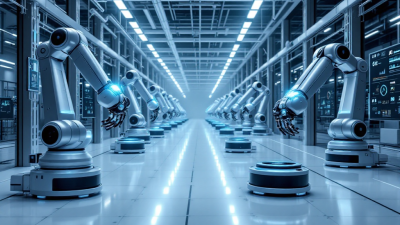
AI Agents in Manufacturing: Driving Efficiency and Innovation on the Factory Floor
Introduction: The New Age of Manufacturing
The emergence of AI agents is heralding a transformative era in the manufacturing industry. Traditionally reliant on mechanical processes and human oversight, modern factories are now leveraging intelligent automation to optimize nearly every facet of production—from predictive maintenance and supply chain management to quality control and product customization. Manufacturers are rapidly realizing that integrating AI can not only streamline operations but also drive unprecedented levels of innovation. This evolution represents a shift from reactive to proactive manufacturing strategies, where real-time data analysis and machine learning algorithms empower decision-makers to anticipate challenges and seize opportunities ahead of time.
How AI Agents Enhance Predictive Maintenance
Predictive maintenance is one of the most compelling applications of AI agents in the manufacturing sector. By analyzing real-time data from sensors and control systems, AI-powered solutions can forecast equipment failures before they occur. For example, Siemens has implemented AI-driven predictive maintenance within its gas turbine production lines, achieving a staggering 50% reduction in unplanned downtime and boosting overall productivity. In addition to forecasting breakdowns, AI agents can simulate equipment performance using digital twin technology—a virtual replica of physical assets. This simulation allows engineers to optimize configurations and refine maintenance schedules without causing disruptions on the factory floor. As a result, manufacturers not only avoid costly repairs but also ensure continuous production flow, providing a competitive advantage in a fast-paced market.
Optimizing Supply Chains with AI
In today’s global market, the efficiency of a supply chain is a critical factor in determining a company’s overall performance. AI agents are revolutionizing supply chain management by integrating vast amounts of data—from supplier performance and inventory levels to fluctuating customer demand. By leveraging advanced machine learning algorithms, companies like Siemens are now able to predict shifts in market demand and optimize production schedules in real time. This intelligent system reduces excess inventory, minimizes delays, and enhances on-time delivery rates. Similarly, BMW’s implementation of an AI-powered supply chain optimization system has streamlined operations, contributed to significant cost savings, and improved customer satisfaction. With the integration of AI, supply chains are not only becoming faster but also more agile and responsive to market changes, ensuring that manufacturers remain one step ahead in an increasingly competitive landscape. For further insights into supply chain optimization using AI, see the work highlighted by Svitla Systems.
Improving Quality Control through AI Technology
Quality control is a cornerstone of manufacturing excellence, and AI agents are redefining this critical process through enhanced accuracy and speed. Traditional quality control methods, often labor-intensive and prone to human error, are rapidly being replaced by AI-powered computer vision systems. These systems perform real-time inspections, detecting microscopic defects that might otherwise be undetectable to the naked eye. Leading manufacturers are reporting remarkable improvements, including a 99.8% defect detection rate and significant reductions in quality control processing times. For instance, BMW utilizes AI-driven visual inspection technologies that not only reduce defect rates by 15% but also shorten the quality control cycle by 30%, ensuring that only the highest quality products leave the assembly line. Meanwhile, Siemens is harnessing advanced imaging combined with machine learning algorithms to perform 100% on-line inspections—demonstrating how continuous real-time data feedback can drive immediate process improvements. These technological advancements ensure that manufacturers can maintain stringent quality standards while simultaneously meeting high production volumes.
Case Study: Siemens and AI in Manufacturing
Siemens stands at the forefront of integrating AI agents into manufacturing, utilizing these technologies across multiple operational domains. In their gas turbine production process, Siemens has successfully implemented AI-driven predictive maintenance tools that have resulted in a substantial 50% reduction in unplanned downtime and $10 million in annual cost savings. Additionally, Siemens’ use of digital twin technology allows them to simulate and optimize production processes before physical implementation. This forward-thinking approach not only reduces operational risks but also enhances overall equipment performance. Beyond maintenance, Siemens has expanded the role of AI into energy management, optimizing energy consumption across factories and further driving down operational costs. The integration of such innovative AI solutions demonstrates Siemens’ commitment to sustainability and efficiency, setting a benchmark for the industry and inspiring other manufacturers to reimagine their production strategies. To delve deeper into these achievements, explore Siemens’ AI in manufacturing initiatives.
Case Study: BMW’s AI-Driven Manufacturing Process
BMW has emerged as a trailblazer in the automotive manufacturing space by incorporating AI agents to enhance both efficiency and product quality. The company has seamlessly integrated AI across multiple production stages, from precision quality control to supply chain optimization. At the BMW Leipzig Plant in Germany, AI agents are actively involved in the robotic process automation of critical tasks such as assembly and welding—improving speed and accuracy while working in tandem with human operatives. Moreover, BMW’s AI-powered visual inspection systems not only perform near-perfect defect detection but also accelerate quality control processes, leading to a measurable reduction in production delays and defect rates. The company has also harnessed AI for product customization, enabling personalized options that drive customer satisfaction and market differentiation. These advancements not only reflect BMW’s commitment to innovation but also highlight the tangible business benefits of integrating AI into manufacturing operations. For more details on BMW’s pioneering strategies, refer to insights from BMW’s AI applications in manufacturing.
Challenges and Considerations in Implementing AI in Manufacturing
Despite the transformative potential of AI agents, manufacturers must navigate a complex landscape of challenges when implementing these technologies. Key obstacles include the integration of legacy systems with modern AI platforms, ensuring robust cybersecurity measures, and addressing the skills gap among employees. Transitioning to an AI-driven environment often requires substantial investments in infrastructure and training, as well as overcoming resistance from staff accustomed to traditional processes. Data privacy and ethical concerns also come to the forefront as manufacturers collect and analyze vast amounts of sensitive information. To successfully adopt AI, companies must develop comprehensive strategies that balance technological innovation with operational stability and workforce adaptability. Moreover, it is crucial to establish clear metrics for success and maintain transparent communication throughout the implementation process. Addressing these challenges head-on can pave the way for a smoother integration and unlock the full potential of AI in manufacturing.
The Future of Manufacturing with AI Agents
As the manufacturing landscape continues to evolve, the role of AI agents is poised to become even more influential. Future advancements promise even greater integration between AI and the Internet of Things (IoT), enabling factories to become fully interconnected ecosystems where every machine, sensor, and system communicates in real time. The convergence of AI with other emerging technologies such as augmented reality and blockchain could further enhance transparency, traceability, and efficiency. These innovations will not only drive productivity but also support sustainable practices by optimizing resource consumption and reducing waste. In addition, continuous improvements in machine learning and data analytics will likely result in more accurate predictive models, enabling manufacturers to preemptively address issues before they impact production. Embracing these future trends is essential for companies that wish to maintain a competitive edge and contribute to a more resilient, agile manufacturing sector.
Conclusion: Embracing AI for Sustainable Growth
The integration of AI agents into manufacturing processes is not merely a trend—it is an essential evolution that drives efficiency, quality, and innovation on the factory floor. Both Siemens and BMW serve as compelling examples of how AI can streamline operations, cut costs, and enhance overall product quality. As manufacturers face increasing pressure to meet high production standards while maintaining sustainability and customer satisfaction, AI offers a powerful tool to address these challenges head-on. While the journey to fully realizing AI’s potential comes with its share of obstacles, the benefits—ranging from reduced downtime and energy consumption to improved quality control and supply chain agility—are clear. By embracing AI-driven solutions, manufacturers can build a robust foundation for sustainable growth and establish a future-ready production environment. The new age of manufacturing is here, and it is powered by the smart, strategic application of AI.