
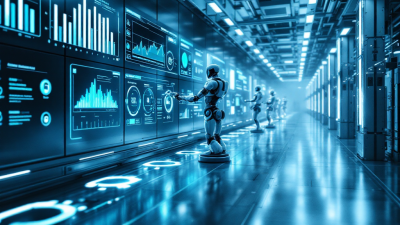
AI Agents in Manufacturing: Driving Smart Factory Innovations
In today’s fiercely competitive industrial landscape, manufacturers are increasingly turning to artificial intelligence (AI) to transform traditional factories into smart, data-driven environments. AI agents, with their ability to analyze vast amounts of data in real time, are setting the stage for a new era of industrial innovation. From predictive maintenance to dynamic production scheduling and enhanced quality control, AI is streamlining operations and driving significant cost savings. In this post, we delve into the transformative role of AI in manufacturing, exploring its benefits, real-world applications, and future potential in building smarter factories.
─────────────────────────────────────────────
Introduction to AI in Manufacturing
The advent of AI in manufacturing has been nothing short of revolutionary. Manufacturers are now leveraging AI agents to optimize processes, predict potential issues, and enforce quality standards with unprecedented speed and accuracy. By integrating AI-driven solutions into existing systems, companies can shift from reactive to proactive management, ultimately increasing efficiency while reducing waste and downtime.
Traditionally, manufacturing processes have been reliant on fixed schedules and predetermined maintenance routines. However, AI introduces a dynamic approach—one that continuously learns from sensor data, production statistics, and environmental variables. This evolution not only drives operational excellence but also provides a competitive edge by ensuring that manufacturing lines run smoother, safer, and more economically. By automating routine decisions and integrating real-time analytics, AI enables manufacturers to predict future trends and make more informed operational decisions.
─────────────────────────────────────────────
Benefits of Smart Factory Innovations
Smart factories represent the convergence of advanced information technologies and traditional industrial operations. The integration of AI within these environments delivers numerous benefits including increased asset uptime, enhanced production efficiency, and significant cost reduction. Manufacturers can now monitor operational health continuously, accurately forecast supply needs, and fine-tune production processes based on real-time data insights.
For instance, companies like Siemens have integrated AI to optimize energy management and predictive maintenance. Their initiatives not only improve the bottom line by reducing energy costs but also contribute to sustainability goals. Moreover, the adaptive nature of AI algorithms means that even minor adjustments in process flows can lead to substantial improvements in overall output, making the investment in these technologies highly attractive and crucial for long-term competitiveness.
─────────────────────────────────────────────
AI in Predictive Maintenance
One of the most impactful applications of AI in manufacturing lies in predictive maintenance. Rather than adhering to fixed maintenance schedules, AI agents analyze sensor data from critical machinery to anticipate equipment failures before they occur. This proactive approach significantly minimizes the risks associated with unexpected downtime.
Companies such as Siemens deploy AI systems on gas turbines to collect and process sensor data in real time. These systems predict potential failures, thereby ensuring that maintenance can be performed before a serious breakdown happens. As a result, Siemens has experienced a notable 15% increase in asset uptime, which has a cascading positive effect on production schedules and overall operational efficiency. This paradigm shift—moving from reactive to proactive maintenance—not only boosts productivity but also reduces costs associated with unplanned outages. For further insights, you can explore the use cases detailed by Worxwide.
─────────────────────────────────────────────
Optimizing Production Schedules with AI
Optimizing production schedules is another key area where AI is making a substantial impact. In the fast-paced environment of modern manufacturing, maintaining an uninterrupted flow of high-quality production is critical. AI agents analyze historical production data, current operational trends, and external market variables to dynamically adjust production processes in real time.
General Electric (GE) is a prominent example of successful AI integration in optimizing production schedules. By harnessing AI, GE has been able to streamline its operations, ensuring that the necessary raw materials and components are available at the critical junctures of production. This optimization has not only improved supply chain reliability but also reduced inventory costs by up to 20%, thereby enhancing overall efficiency. The underlying AI models are designed to learn from every stage of the production process, ensuring that adjustments are continually made to meet production demands and market fluctuations. In doing so, these systems help manufacturers remain agile and responsive to change, a critical advantage in today’s volatile market.
─────────────────────────────────────────────
Enhancing Quality Control through AI
Quality control is paramount in ensuring the competitiveness and reliability of manufactured products. AI agents are transforming quality control processes by providing precise, consistent, and rapid inspection capabilities that far exceed traditional human-based inspections. Advanced vision systems powered by AI can detect minute defects in real time, ensuring that any deviation from quality standards is immediately flagged and addressed.
At BMW, AI-powered vision systems are deployed on production lines to inspect components during vehicle assembly. This has not only reduced production times but has also led to significant improvements in product consistency and a reduction in defect rates. Additionally, Bosch employs real-time data processing systems that highlight defects with greater accuracy, ensuring that quality standards are consistently met. These implementations underscore how AI-driven quality control can enhance product reliability and customer satisfaction, ultimately strengthening brand reputation. Learn more about the transformative impact of these systems at Red Fern.
─────────────────────────────────────────────
Real-World Examples of Smart Factories
Examining real-world examples reveals the tangible benefits of deploying AI agents in manufacturing environments. Several renowned companies have demonstrated how smart factory innovations can translate into significant improvements in efficiency, cost savings, and product quality.
Siemens has successfully integrated AI into its operations to optimize energy management across factories, reducing energy costs while enhancing operational sustainability. Similarly, Bosch’s AI-driven quality control initiatives have not only reduced waste but also delivered substantial cost savings—projecting a potential saving of roughly one billion euros by 2025 after their considerable investments in automation and digitization. BMW’s Regensburg plant offers another compelling example; by monitoring conveyor technology with an AI system, the plant prevents over 500 minutes of assembly disruption annually, ensuring smoother operations during vehicle assembly processes.
Furthermore, Rethink Robotics has taken a leap forward by integrating collaborative robots (cobots) that work seamlessly alongside human operators. These cobots manage repetitive tasks such as assembly and quality inspection, boosting production efficiency by 30% and significantly reducing human error. Such cases demonstrate that smart factory innovations not only increase operational efficiencies but also contribute to a safer and more flexible production environment. Additional examples and insights are outlined on Blocktunix.
─────────────────────────────────────────────
Challenges and Considerations in Implementation
While the benefits of AI in manufacturing are compelling, the transition to a smart factory is not without its challenges. Upfront investments in AI infrastructure, data integration, and staff training represent significant hurdles that manufacturers must overcome. Additionally, ensuring data security and addressing potential system vulnerabilities become critical as factories become more interconnected and reliant on digital solutions.
Data integration warrants particular attention. Manufacturing plants typically operate with legacy systems that may not be inherently compatible with modern AI solutions. Therefore, successful implementation requires extensive planning and phased integration to bridge existing technologies with new AI capabilities. Moreover, there is a learning curve associated with the adoption of AI, where employees need to be trained to work alongside these intelligent systems. Manufacturers must also navigate regulatory compliance and ensure that the data processed by AI agents is managed responsibly and securely.
Despite these challenges, forward-thinking companies are finding creative and scalable solutions. For instance, Nestlé’s strategy to embed predictive technology within its operational frameworks reflects a robust commitment to streamlining workflows and enhancing agility. Implementing such frameworks often involves a mix of in-house innovation and strategic partnerships, paving the way for gradual yet impactful transitions to smart factory operations. These considerations highlight the necessity for a balanced approach that weighs potential risks against long-term gains.
─────────────────────────────────────────────
Conclusion: The Future of AI in Manufacturing
The transformative potential of AI agents in manufacturing is only beginning to unfold. With tangible benefits such as predictive maintenance, optimized production schedules, enhanced quality control, and proactive energy management, AI is poised to redefine the landscape of industrial manufacturing. As companies like Siemens, GE, BMW, Bosch, and many others continue to innovate using AI, the smart factory of the future is rapidly becoming a reality.
Looking ahead, manufacturers will increasingly rely on AI to drive data-driven decision making and to adapt swiftly to market demands. The convergence of AI with emerging technologies like the Internet of Things (IoT) and cloud computing will further cement its role in the digital transformation of production environments. While implementation challenges remain, the continued evolution of AI agents promises not only operational efficiencies but also profound strategic benefits. Undoubtedly, AI will be a cornerstone of competitive advantage in the manufacturing sector moving forward.
By embracing this new era of industrial innovation, manufacturers can look forward to a future where downtime is minimized, productivity maximized, and quality incessantly refined, ensuring that the factories of tomorrow are smarter, more agile, and more sustainable.
—
For more insights on AI-driven manufacturing innovations and smart factory solutions, explore resources provided by industry leaders such as Worxwide, Blocktunix, and Master of Code.