
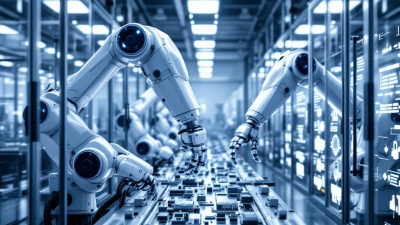
AI Agents in Manufacturing: Revolutionizing Production Lines and Quality Control
Manufacturing has long been the backbone of the global economy, traditionally relying on labor-intensive processes and rigid production systems. Yet, with rapid advancements in artificial intelligence (AI), the manufacturing landscape is undergoing a transformative revolution. AI agents are now integral to production lines, automating tasks, enhancing quality control, and significantly reducing downtime. In this post, we delve into how AI-driven systems are optimizing production processes, delivering cost savings, and elevating overall efficiency in manufacturing.
–––––––––––––––––––––––––––––––––––––––––––––––––––
Introduction to AI Agents in Manufacturing
AI agents are software programs designed to perform specific tasks by mimicking human cognitive functions. In manufacturing, these agents play a crucial role in streamlining operations, from production line automation to real-time defect detection. The integration of AI into manufacturing processes reduces manual oversight and allows for continuous monitoring of machinery and systems. By leveraging machine learning, deep learning, and computer vision, AI agents can analyze complex data patterns and make informed decisions rapidly—ushering in an era of smarter, more agile manufacturing practices.
The shift towards AI-driven manufacturing not only optimizes production but also paves the way for predictive maintenance and enhanced quality control. This transformation is supported by robust research and real-world success stories that demonstrate AI’s impact on reducing operational costs and extending equipment life. As industries face mounting pressure to improve efficiency and minimize downtime, AI agents are emerging as indispensable tools in the modern production environment.
–––––––––––––––––––––––––––––––––––––––––––––––––––
The Role of AI in Automating Production Processes
Automation is the cornerstone of modern manufacturing, and AI agents have accelerated this process by taking on tasks that were once labor-intensive and error-prone. By automating repetitive and complex processes, AI streamlines production lines, reducing human error and increasing throughput. For instance, AI-powered robots can manage assembly operations with unparalleled precision, ensuring consistent product quality and rapid scalability.
Moreover, AI systems can integrate seamlessly with the Internet of Things (IoT) devices, collecting real-time data from sensors embedded in machinery. This integration facilitates instantaneous decision-making for line adjustments, inventory management, and process optimization. Research has shown that manufacturers who adopt AI-driven predictive maintenance enjoy a marked increase in production efficiency—up to a 25% boost according to findings shared on LinkedIn Pulse.
The ability of AI to operate around the clock without fatigue or human error further underscores its transformative potential in automating production processes. By freeing up human workers to focus on strategic decision-making and innovation, the technology not only improves operational efficiency but also drives the next wave of industrial evolution.
–––––––––––––––––––––––––––––––––––––––––––––––––––
Enhancing Quality Control with AI: Techniques and Benefits
Quality control is a critical element of manufacturing, where even a minimal flaw can lead to severe consequences, including costly recalls and diminished brand trust. AI agents utilize advanced algorithms and neural networks, such as Convolutional Neural Networks (CNNs), Recurrent Neural Networks (RNNs), and Generative Adversarial Networks (GANs), to detect and classify defects in real-time. Systems like “DeepInspect” offer automated flaw detection that elevates product quality by ensuring consistency across each production cycle. Detailed analyses, like those presented on arXiv, reveal that AI-driven quality control techniques not only boost inspection efficiency but also significantly reduce the rate of defective products.
In electronics manufacturing, innovative systems like DVQI streamline multi-task inspection processes. These systems require minimal programming, allowing manufacturing engineers to deploy robust inspection routines with ease while maintaining rapid production cycles. Furthermore, advancements in machine learning have led to near-perfect accuracy in certain quality control applications. For example, injection moulding quality control systems have achieved up to 99.4% accuracy in predicting product quality, which substantiates the substantial benefits AI offers in ensuring superior production standards (arXiv).
The overall benefits of AI-enhanced quality control extend beyond merely reducing defects—they also facilitate data-driven decision-making, enabling companies to fine-tune both their processes and products in real time.
–––––––––––––––––––––––––––––––––––––––––––––––––––
Case Studies: Real-World Applications in Manufacturing
Across the global manufacturing landscape, several real-world implementations highlight the transformative power of AI. For instance, Siemens has successfully incorporated AI-driven predictive maintenance into their production facilities, achieving a remarkable 50% reduction in machine downtime. This significant improvement not only enhances operational efficiency but also translates into substantial cost savings (LinkedIn Pulse).
Another compelling example comes from a leading automotive manufacturer that integrated AI-powered predictive maintenance into their assembly lines. This strategic move resulted in a 20% drop in maintenance costs, equating to annual savings of around $1.2 million. Comparable success is noted in the energy sector, where a major provider harnessed sensor data to lower operational costs by $3.2 million annually while cutting unplanned downtime by 40% (MoldStud).
These case studies epitomize how AI’s multifaceted applications—from automated quality control to predictive maintenance—are enabling manufacturers to not only improve production yield but also gain a competitive edge in a fast-evolving global market.
–––––––––––––––––––––––––––––––––––––––––––––––––––
Predictive Maintenance: Reducing Downtime and Costs
Preventing equipment failure before it occurs is a marquee achievement of AI in manufacturing. Predictive maintenance leverages AI algorithms to monitor conditions such as temperature, vibration, and other performance indicators, thus predicting failures before they disrupt production. The U.S. Department of Energy estimates that this technological strategy could save industries up to $17 billion annually by focusing maintenance efforts only when necessary, thereby avoiding unnecessary servicing and emergency repairs (LinkedIn Pulse).
Moreover, machinery that routinely benefits from predictive maintenance tends to have a 20-30% longer operational life. This extended lifespan translates directly into reduced capital expenditure and enhanced return on investment for manufacturers. The data-driven precision of AI systems ensures that every maintenance activity is both timely and effective, thereby eliminating the guesswork of traditional maintenance strategies. These benefits are particularly impactful in high-stakes manufacturing environments, where downtime can lead to significant financial losses.
–––––––––––––––––––––––––––––––––––––––––––––––––––
Challenges and Future Trends in AI for Manufacturing
Despite the myriad benefits, the integration of AI into manufacturing processes comes with its own set of challenges. One primary concern is the need for robust data infrastructure. AI systems require vast amounts of high-quality data to function effectively, and many manufacturers must invest significantly in IoT sensor networks and data analytics capabilities. Additionally, cybersecurity risks are heightened as more devices become interconnected in the digital ecosystem.
The future of AI in manufacturing is promising, however. In the coming years, we can expect advancements in edge computing, which will allow for faster data processing and decision-making right on the production floor. Also, further improvements in machine learning algorithms will make AI systems even more adaptive and efficient. As manufacturers continue to collaborate with technology providers and invest in digital transformation, AI is poised to become ever more integral to process optimization and innovation.
Emerging trends point towards a convergence of AI, robotics, and IoT, creating what many refer to as smart factories. These environments leverage fully integrated digital systems to create seamless, intelligent production processes—ushering in a new era where agility and efficiency are paramount.
–––––––––––––––––––––––––––––––––––––––––––––––––––
Conclusion: The Future of Manufacturing with AI Agents
AI agents are fundamentally reshaping the manufacturing sector by automating complex production processes, elevating quality control standards, and dramatically reducing downtime and associated costs. With concrete case studies and extensive research validating their benefits, it is clear that AI will continue to drive production innovation well into the future.
For manufacturing executives and technologists alike, the adoption of AI is no longer a luxury but a necessity to stay competitive in a global market. By addressing current challenges and capitalizing on emerging technologies, companies can build smarter, more resilient production systems that not only meet today’s demands but also pave the way for future growth.
In an era where efficiency, cost savings, and quality are paramount, AI agents stand at the forefront of industrial transformation—charting a course for the next generation of manufacturing excellence.