
AI Agents in Retail: Revolutionizing Customer Experience and Inventory Management
In today’s rapidly evolving retail landscape, artificial intelligence (AI) is no longer a futuristic concept—it’s the engine driving efficiency, personalization, and robust operational management. Retail giants are leveraging AI agents to streamline operations, enhance customer engagements, and optimize inventory management. This comprehensive post examines how AI agents are transforming the retail industry, showcasing real-world examples from prominent market leaders such as Amazon and Walmart, and discussing the broad spectrum of benefits and considerations provided by emerging AI technologies.
——————————————————————————–
Introduction to AI Agents in Retail
Retail has always been at the forefront of innovation, and the adoption of AI agents reflects this commitment to evolving customer needs and market demands. AI agents blend advanced algorithms and machine learning techniques to process vast amounts of data, thereby providing actionable insights in real time. These agents not only automate routine tasks but also enable retailers to harness predictive analytics for stocking management, dynamic pricing, and personalized shopping experiences.
AI’s revolutionary impact in the retail sector is underpinned by its ability to adapt to consumer behavior while optimizing operational processes. From AI-powered virtual assistants that provide round-the-clock support to sophisticated logistics automation, retailers are embracing these technologies to stay competitive. The confluence of data analytics, machine learning, and cloud computing has made it possible for AI agents to analyze historical data, forecast trends, and make decisions that significantly improve both the customer experience and inventory control.
——————————————————————————–
Enhancing Customer Experience through Personalization
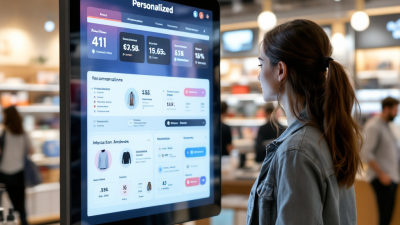
Customer experience is the cornerstone of retail success, and AI agents are transforming how retailers engage with their clientele. Personalized recommendations are a prominent tool used by these agents—leveraging complex algorithms that analyze previous purchases, browsing patterns, and even social media behavior to suggest products uniquely suited to individual customers. Retailers such as Amazon have effectively employed these AI-driven recommendation engines to drive higher conversion rates and foster customer loyalty. For instance, Amazon’s AI-powered engine examines customer behavior deeply, achieving a level of customization that significantly boosts sales and overall customer satisfaction (AI & Automation in Retail).
Moreover, virtual AI agents act as digital concierges—providing real-time assistance, answering queries about product availability, order status, and return policies. This level of 24/7 engagement not only enhances the shopping experience but also allows human employees to address more complex customer needs. By integrating these intelligent systems, retailers can deliver tailored experiences that resonate with a digitally savvy audience, thereby increasing satisfaction and encouraging repeat purchases.
——————————————————————————–
Streamlining Inventory Management with Predictive Analytics
Inventory management remains a critical challenge for retailers, and the incorporation of AI agents promises a revolution in this area. Traditional inventory systems often struggle with issues like overstocking or stockouts, while AI-driven systems enhance predictive accuracy by analyzing real-time data alongside historical trends. By using sophisticated algorithms, AI agents can predict consumer demand with greater precision and ensure that stock levels remain optimal—a solution that reduces waste and maximizes sales opportunities.
Predictive analytics allows retailers to automate reordering processes, which in turn addresses issues such as expired products or seasonal fluctuations. Companies leveraging these techniques report notable reductions in inventory costs, citing figures as high as a 10-20% decrease in expenses (SuperAGI on AI in Retail Sales). Real-time inventory tracking supported by AI mitigates the risks associated with manual inventory checks and error-prone systems, ensuring product availability and operational efficiency.
——————————————————————————–
Case Study: Amazon’s Use of AI in Retail Operations
Amazon is at the pinnacle of retail innovation, constantly evolving its logistics and warehouse operations to enhance efficiency and customer satisfaction. In June 2025, Amazon announced a transformative integration of AI into its delivery and logistics processes. One of the most significant advancements involves the deployment of AI-driven warehouse robots capable of handling complex tasks such as unloading trailers and retrieving specific parts on command. These robots not only accelerate operations but also reduce errors in order processing.
Additionally, Amazon has embraced generative AI for creating advanced mapping tools that optimize delivery routes for drivers. This initiative is set to improve overall efficiency and reduce emissions, aligning logistics with sustainable practices. The seamless integration of these technologies illustrates how AI can revolutionize both backend operations and customer-facing services, ensuring a consistently high level of performance throughout the retail value chain (Amazon’s delivery, logistics get an AI boost).
——————————————————————————–
Case Study: How Walmart Optimizes Inventory with AI
Walmart has long been a leader in retail innovation and its recent AI-powered shopping solutions further solidify its commitment to modernizing the customer experience and inventory management. In January 2024, Walmart introduced an array of AI-driven features, including advanced search functions and a product replenishment service that maintains optimal stock levels on shelves. By partnering with Microsoft, Walmart has not only streamlined its shopping experience across physical and digital platforms but also developed sophisticated demand forecasting algorithms.
An equally significant milestone was Walmart’s expansion of its AI and drone delivery services, as announced during a CES trade show. The company plans to extend drone deliveries to an additional 1.8 million households in the Dallas-Fort Worth area, combining generative AI-powered search tools and an innovative “InHome Replenishment” service. This service automatically restocks frequently purchased items, ensuring that customers can rely on consistent product availability (Walmart experiments with AI to enhance customers’ shopping experiences). Walmart’s integrated approach underlines the practical benefits of AI in managing inventory and enhancing the overall customer experience.
——————————————————————————–
Tangible Benefits of AI Integration in Retail
The integration of AI agents in retail offers an impressive array of benefits that are both tangible and strategic. Among the primary advantages is the substantial improvement in operational efficiency. AI can significantly reduce the manual labor involved in common retail tasks such as inventory tracking, order processing, and customer service. Automation of these repetitive tasks ensures faster processing times and fewer human errors, leading to smoother operations and cost savings.
Another key benefit is the enhancement of the customer journey via personalized recommendations and responsive support systems. With the ability to process vast datasets, AI agents deliver tailored responses that meet the specific demands and preferences of individual customers. This level of personalization drives engagement and loyalty while also leading to increased revenue. Furthermore, AI’s role in dynamic pricing and real-time supply chain updates prevents overstocking and mitigates inventory waste, optimizing profit margins and resource allocation (AI & Automation in Retail).
Enhancements in logistics, such as the use of predictive analytics and AI-powered drones for delivery, also underscore the broader benefit of supply chain optimization. Retailers can manage delivery schedules, production levels, and distribution networks in real time, ensuring maximum efficiency and customer satisfaction—a critical factor in today’s fast-paced market.
——————————————————————————–
Challenges and Considerations for Implementing AI in Retail
Despite the substantial benefits that AI brings, there are also several challenges and considerations that retailers must navigate. Implementing AI systems requires significant investment—not only in technology but also in training and infrastructure. The initial costs, coupled with the need to continually update and maintain these systems, can be a barrier for smaller retailers.
Data privacy and cybersecurity are other critical concerns. As AI agents rely heavily on processing consumer data, ensuring that this data remains secure is paramount. Retailers must adhere to stringent data protection regulations and implement strong security protocols to prevent potential breaches.
Moreover, seamlessly integrating AI with existing legacy systems is no small feat. The compatibility issues and the required adaptation period can temporarily disrupt operations. Retailers must have a clear strategy for integration, ensuring that the human workforce is adequately trained to work alongside these technologies. Addressing these challenges requires a careful balance between innovation and practical deployment, as well as ongoing investment in both technology and personnel.
——————————————————————————–
Future Trends in AI Applications for Retail
Looking forward, the future of AI in retail promises further groundbreaking innovations that will reshape industry norms. One of the exciting trends is the increasing sophistication of AI agents to predict and alter consumer behavior with real-time data. Enhanced machine learning models, combined with even more extensive data sets, will enable retailers to deliver an even more personalized and engaging shopping experience.
Advancements in autonomous checkout and AI-powered drone deliveries are set to redefine the way transactions and logistics are handled. These technologies not only promise to reduce wait times and manual labor but also enhance overall customer convenience. In addition, AI’s role in supply chain optimization will continue to expand, with growing integration of Internet of Things (IoT) devices providing richer data sets for improved predictive analytics.
Lastly, as sustainability becomes a core focus, AI will help retail businesses balance operational efficiency with environmental responsibility. Tools that track carbon footprint and optimize energy use in warehousing and delivery are on the horizon, aligning operational improvements with broader sustainability goals.
——————————————————————————–
Conclusion: The Transformative Potential of AI in Retail
In summary, the transformative potential of AI agents in the retail industry is undeniable. From revolutionizing customer experiences through personalized interactions to streamlining inventory management with predictive analytics, AI is reshaping the landscape of modern retail. Industry leaders like Amazon and Walmart are already demonstrating how AI can drive efficiency, reduce operational costs, and create more engaging customer journeys. Although challenges related to cost, integration, and data security persist, the benefits far outweigh the limitations, positioning AI as a key enabler of future retail success.
As technological advancements continue to evolve, retailers that strategically harness the power of AI agents are likely to enjoy sustained competitive advantage while meeting the ever-changing demands of their customers. Embracing this digital revolution not only streamlines operations but also offers unprecedented opportunities for innovation and growth in an increasingly complex marketplace.
By staying informed and agile, retail businesses can leverage AI to create seamless, efficient, and personalized experiences—ultimately redefining the way we shop and manage inventory in the modern retail era.