
Designing Durable Tools for AI Agents: Idempotency, Sagas, and Safe Side-Effects
Summary
When your AI agent nudges ERP/CRM, it’s not “just an API call.” It’s a business decision with financial, compliance, and reputational consequences. This practical guide shows Power Platform and Azure teams how to design durable, audit-ready tools that agents can trust—under real-world conditions of retries, concurrency, and partial failures. You’ll learn how to apply idempotency keys, compensating transactions (sagas), concurrency controls, and safe side-effects. We close with a worked CreateInvoice example, a quick start for SMBs, and a readiness checklist with templates and KPIs.
Why Agents Need Durable Tools, Not Just Smart Prompts
Even the best LLM prompt won’t save you from duplicate invoices, drifted records, or partial writes. AI agents operate in unreliable networks, with at-least-once triggers, throttling, and human-in-the-loop approvals. Real-world failure modes include:
– Duplicate requests: Transient network errors cause retries; the same POST lands twice and creates two orders.
– Partial writes: A flow updates the order header, then fails on lines—leaving an inconsistent order.
– Lost updates: Two automations overwrite each other’s changes minutes apart.
– Drift and stale reads: The agent reads before an approval or settlement; actions taken on stale data cause reversals.
Durability patterns eliminate these problems at the tool boundary:
– Idempotency ensures a retry doesn’t change the outcome.
– Sagas ensure multi-step business processes can be reversed safely.
– Concurrency controls prevent overwriting and racing side-effects.
– Audit-safe patterns preserve a reliable, explainable trail.
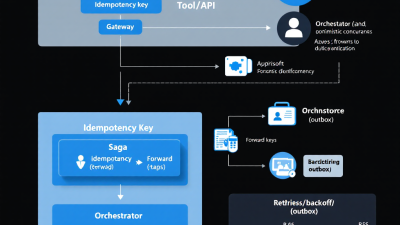
Reference Architecture for Reliable Agent Actions
Think in layers that separate “what the agent wants” from “how the business executes safely.”
Flow:
– Agent: Plans and requests action using a tool schema (e.g., CreateInvoice).
– Tool Gateway: Validates contract, enforces idempotency, normalizes telemetry, and applies policy (DLP, allowlists).
– Orchestrator: Coordinates steps, retries safely, routes approvals, and executes compensations when needed.
– Systems of Record (ERP/CRM, Payments, Inventory): Enforced through upsert semantics, optimistic concurrency, and append-only events.
– Observability and Audit: Trace IDs, operation IDs (idempotency keys), business events, and audit logs.
This separation lets you evolve tool contracts and orchestration logic without changing the agent’s mental model, while guaranteeing durable, observable execution.
Idempotency Fundamentals: Keys, UPSERT, and Exactly-Once Effects
At scale, you cannot rely on “exactly-once delivery.” You design for at-least-once and achieve exactly-once effects for business operations through idempotency. The formal definition from HTTP: “A request method is considered idempotent if the intended effect on the server is the same for multiple identical requests.” See the IETF’s HTTP Semantics (RFC 9110). While GET, PUT, DELETE are defined to be idempotent, your business tools often use “write” semantics that must be made idempotent by design.
Key concepts:
– Idempotency keys: A client-provided unique key per business operation (not per network attempt). The server deduplicates based on key and input hash, returning the same result for retries.
– Upsert semantics: Create if missing, update if present, using natural (alternate) keys to avoid duplicates in systems like Dataverse.
– Deterministic handlers: If the same request repeats, produce the exact same side-effects and response (or a documented, stable error).
– Bounded dedupe window: Persist idempotency keys for a window (e.g., 24–72 hours) aligned with business risk and throughput.
Implementing Idempotency on Power Platform and Azure
Dataverse alternate keys and Upsert
– Use natural/business keys (invoiceNumber, externalOrderId) as alternate keys to enforce uniqueness and enable true upsert without race conditions. See Define alternate keys for an entity.
– Upsert strategy: Try create with alternate key; on conflict, update by key. This allows safe retries without duplication.
Optimistic concurrency with ETags
– Read a record with its ETag and submit updates with If-Match to prevent lost updates. If the ETag changed since read, return a 412 and let the orchestrator reconcile. See Use ETag values to implement optimistic concurrency.
Power Automate reliability controls
– Concurrency Control: Limit parallelism in “Apply to each” to avoid racing writes into ERP/CRM. See Concurrency control.
– Backoff and throttling: Dataverse enforces service protection limits and returns 429 with Retry-After; respect it and use exponential backoff. See Service protection API limits.
Azure Functions and custom connectors
– Functions may run more than once due to triggers and retries; make them idempotent. Microsoft’s guidance is explicit: ensure the function is idempotent. See Azure Functions best practices.
– Adopt an Idempotency-Key request header in your custom connector and backend, modeled after proven practices used by payment APIs like Stripe idempotency. Persist the key, request hash, and response to guarantee safe retries.
Designing Tool Contracts Agents Can’t Misuse
Your tool contract is the safety harness. Design it so an agent—and your future self—cannot accidentally misuse it.
Contract design principles:
– Required idempotencyKey: A mandatory string the agent generates for each logical operation. Reject requests without it.
– Stable operation names and HTTP semantics: Prefer PUT with a business key for upsert-like operations; reserve POST for non-repeatable, one-off creations guarded by idempotency keys.
– Deterministic schemas: Explicit enums, formats (ISO 8601), and currency codes. Disallow free-form fields that change behavior.
– Explicit timeouts and bounded retries: Include a retry policy in the contract (maxRetries, retryBackoffMs) and return Retry-After when you need the client to back off.
– Clear outcomes: status (succeeded, pendingApproval, compensated, failed), correlationId, and links to audit entries.
– Validation-first: Synchronously validate that all referenced entities exist or are creatable, to fail fast without side-effects.
Sagas and Compensating Transactions
When a business process spans multiple systems (ERP, payments, inventory), you cannot lock everything. You coordinate local transactions with compensating transactions to restore consistency on failure. This is the Saga pattern: a series of steps, each with a defined compensation if it later needs to be undone. See the Azure Architecture Center’s overview of the Saga pattern.
When to compensate:
– Irreversible downstream effects have not occurred yet: cancel or reverse the prior steps.
– Reversible financial operations: issue refunds, void authorizations, reverse journal entries.
– Human state: if approvals occurred, log and escalate instead of silent compensation.
Modeling reversible steps:
– Finance: Authorize payment (compensate by void), post invoice (compensate by credit memo), allocate tax (compensate by tax reversal).
– Orders: Reserve inventory (compensate by release), create shipment (compensate by cancel), notify customer (compensate by follow-up notice).
– Case management: Open case (compensate by close as error), assign agent (compensate by unassign), log activity (compensate by add correction note).
Saga Implementation Patterns
Azure Durable Functions orchestrators
– Use orchestrators to coordinate activities deterministically, with built-in retries and compensation logic. Durable Functions checkpoint state between awaits to survive restarts and scale events. See Durable Functions — Error handling.
– Pattern: Orchestrator calls Activity A (create invoice), B (reserve inventory), C (capture payment). On failure in C, orchestrator runs compensations B- (release inventory), A- (void invoice), then marks saga as compensated.
Logic Apps/Power Automate for human approvals
– Blend human-in-the-loop: pause after “CreateInvoice” for manager approval; resume saga on approval or execute compensation on rejection.
– Use built-in approval connectors, with timeouts and escalation paths.
Dataverse plugins for local compensations
– For single-entity side-effects, encapsulate compensations in plug-ins or Power Fx formulas that reverse a change when a flag is set (e.g., revert status, un-link related records). Store compensation metadata on the entity for audit.
Concurrency Control in Shared Business Data
Never trust that you’re the only writer.
Optimistic concurrency with ETags/row version
– Fetch with ETag and submit updates with If-Match to avoid lost updates and provide friendly retries. See Use ETag values to implement optimistic concurrency.
Selective locks and sequencing
– Redis locks: Acquire a short-lived lock on a business key (e.g., customerId) for critical sections. Use conservative TTLs and idempotent finalization.
– Service Bus sessions: Funnel all messages for a key through one session for ordered processing and mutual exclusion.
– Power Automate parallelism: Set “Apply to each” concurrency to 1 for sensitive sections, or to a small number backed by ETag checks. See Concurrency control.
Throughput with safety
– Partition by business key, shard the workload, and favor eventual consistency where permissible, while keeping hard constraints (e.g., invoice number uniqueness) enforced with alternate keys. See Define alternate keys for an entity.
Safe Side-Effects and Auditability
Patterns that make auditors smile and incidents resolvable in minutes, not days:
– Outbox pattern: Write intended events (e.g., InvoiceCreated) to an outbox table in the same transaction as your state change. A background dispatcher publishes events exactly once by tracking outbox IDs.
– Append-only event log: Never overwrite history. Record state transitions (who, what, when, why, correlationId, idempotencyKey).
– Dataverse auditing: Enable table and field-level auditing to capture create/update/delete with actor identity and timestamps. See Enable and use auditing.
– PII controls: Redact or tokenize PII in tool responses and logs; store references to secure vault locations instead of raw data.
– Lineage and governance: Maintain data lineage entries and owners (e.g., catalog entries) so regulated teams can trace agent-produced changes.
Observability for Agents
Give every operation a passport and a breadcrumb trail.
What to emit
– Traces: A single distributed trace across Agent → Gateway → Orchestrator → ERP with correlationId and idempotencyKey.
– Metrics: Success rate, p50/p95 latency, throttling rate (429s), retry counts, compensation rate.
– Logs: Structured, schema-driven with event names and business identifiers.
Business KPIs to watch
– Duplicate rate: Percent of requests deduped via idempotency keys.
– Compensation rate: Percent of sagas requiring compensation; top 5 compensation reasons.
– Mean time to recover (MTTR): From failure detection to either success or compensation.
– Throttling and backoff effectiveness: 429 rate and compliance with Retry-After from Dataverse. See Service protection API limits.
Security and Governance Guardrails
– Least-privilege service principals: Scope each tool to only the tables/operations it needs (read vs write vs approve).
– DLP policies: In Power Platform, enforce connector DLP boundaries; keep HTTP/Custom connectors in the right business data group.
– Connector allowlists: Only permit vetted connectors in production environments.
– Environment isolation: Separate dev/test/prod; use canary releases for new tool versions.
– Key/secret hygiene: Store connection secrets in Azure Key Vault; rotate regularly.
– Break-glass and approvals: Require elevated approvals for high-risk actions; log every elevation and approval event.
Testing Durable Behavior
Test the failures you’re afraid of—on purpose.
Core test types
– Replay tests: Re-submit the same request with the same idempotencyKey many times; assert single durable effect and stable response.
– Fault injection: Randomly fail steps to force saga compensations; verify no orphaned side-effects.
– Clock-skew and timeouts: Offset orchestrator time, inject timeouts, and assert correct backoff/Retry-After handling.
– Retry storms: Simulate upstream timeouts triggering parallel retries; ensure dedupe stands up.
– Idempotency fuzzing: Slightly mutate payloads under the same idempotencyKey; verify the server rejects conflicting payloads.
– Human-in-the-loop drills: Expire approvals, simulate out-of-office, and test escalation paths.
Worked Example — CreateInvoice Tool End-to-End
Contract highlights
– Name: CreateInvoice
– Required fields: idempotencyKey, invoiceNumber (alternate key), customerId, currency, lines[], dueDate
– Options: approvalPolicyId, maxRetries, retryBackoffMs
– Response: status (succeeded, pendingApproval, compensated, failed), invoiceId, auditId, correlationId
Flow
1) Gateway validation and idempotency
– Reject if idempotencyKey missing.
– Check idempotency store: if seen, return cached response; if payload hash differs, return 409 Conflict: “Idempotency key reuse with different payload.”
2) Upsert with Dataverse alternate key
– Attempt create with invoiceNumber as alternate key. If conflict, update the record’s non-financial fields; do not duplicate. See Define alternate keys for an entity.
3) Optimistic concurrency on updates
– When adding lines or recalculating totals, read with ETag and update with If-Match to prevent lost updates. See Use ETag values to implement optimistic concurrency.
4) Approval checkpoint
– Orchestrator pauses for manager approval in Power Automate. If timeout lapses, auto-cancel via compensation. Concurrency is limited via “Apply to each” Concurrency Control for batched invoices. See Concurrency control.
5) Payment step and saga compensation
– Try payment capture. On failure, run compensations: unreserve inventory, mark invoice as voided, post credit memo if needed. This follows the Saga pattern and can be orchestrated reliably with Durable Functions’ retry and error handling. See Durable Functions — Error handling.
6) Outbox and audit
– Write an outbox event (InvoiceCreated or InvoiceVoided) in the same transaction. Enable Dataverse auditing on the invoice table to capture who did what, when. See Enable and use auditing.
7) Retries and throttling
– Respect Dataverse 429 Retry-After; back off exponentially. See Service protection API limits.
8) API surface
– Expose an Idempotency-Key header in the custom connector; the backend dedupes using key+hash, inspired by Stripe idempotency.
– If hosted as an Azure Function, ensure handler is idempotent, since it may execute more than once. See Azure Functions best practices.
SMB Quick Start on Power Platform
If you need results fast without boiling the ocean:
– Dataverse first: Add an alternate key (invoiceNumber) to your Invoice table. Build your flow to “Create or update” by that key. See Define alternate keys for an entity.
– Add Concurrency Control: Set “Apply to each” degree to 1 where records can collide. See Concurrency control.
– Respect throttling: Configure retry with exponential backoff and honor Retry-After from Dataverse. See Service protection API limits.
– Custom Connector: Define an Idempotency-Key header and pass through from the agent. Use backend storage to dedupe, modeled on Stripe idempotency.
– Audit: Enable Dataverse auditing on your key tables. See Enable and use auditing.
Readiness Checklist and Templates
Idempotent tool checklist
– Contract requires idempotencyKey and rejects conflicting payload reuse.
– Upsert semantics implemented using a business-alternate key.
– ETag/If-Match used on updates to prevent lost updates.
– Dedupe window and storage defined; responses cached per idempotencyKey.
– Retry/backoff policy honors Retry-After; exponential backoff configured.
– Observability: correlationId, idempotencyKey, and business identifiers in every log and trace.
Saga step/compensation template
– Step: Name, Preconditions, Action, Success Event, Failure Modes.
– Compensation: Trigger Condition, Compensating Action, Idempotency Notes, Post-Compensation Event.
– Timeouts: Max wait, escalation path.
– Ownership: Service principal and privileges required.
Retry policy matrix (example)
– Validation failures: Do not retry; return 400 with details.
– Throttling (429): Retry after Retry-After header with exponential backoff. See Service protection API limits.
– Transient network/timeouts: Retry with jitter; limit attempts.
– Concurrency (412 due to ETag): Re-read and reapply intent; cap retries to prevent livelock.
Sample tool schema fields (OpenAPI/AI tool)
– Headers: Idempotency-Key (required), Correlation-Id (optional).
– Body: {
invoiceNumber, customerId, currency, lines[], dueDate, approvalPolicyId, maxRetries, retryBackoffMs
}
– Responses:
200: { status: succeeded|pendingApproval|compensated, invoiceId, auditId, correlationId }
202: { status: pendingApproval, approvalTaskId }
409: { error: conflict, reason: idempotencyKeyReuseWithDifferentPayload }
412: { error: preconditionFailed, reason: etagMismatch }
Closing and Next Steps
Durable tools turn clever agents into dependable coworkers. The patterns here—idempotency keys, sagas, optimistic concurrency, outbox+audit—are proven in the wild and map cleanly onto Power Platform and Azure. They help you cut duplicate rates, contain risk, and make every side-effect explainable.
B. Cobra Systems can help you design, implement, and audit these patterns end-to-end: from agent tool contracts and custom connectors to Durable Functions orchestrations, Dataverse modeling, and compliance-grade observability. If you’re ready to move beyond prompts and into durable, production-grade agent operations, let’s build your reference implementation and reliability dashboard together.
References
– HTTP idempotency concepts: HTTP Semantics (RFC 9110)
– Azure Functions idempotency: Azure Functions best practices
– Saga pattern overview: Saga pattern
– Durable Functions error handling: Durable Functions — Error handling
– Idempotency keys in APIs: Stripe idempotency
– Dataverse optimistic concurrency: Use ETag values to implement optimistic concurrency
– Dataverse alternate keys & upsert: Define alternate keys for an entity
– Dataverse service protection limits: Service protection API limits
– Power Automate concurrency control: Concurrency control
– Dataverse auditing: Enable and use auditing