
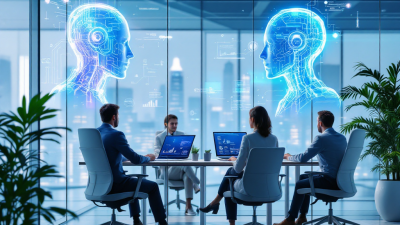
AI Agents and the Future of Work: Navigating Job Transformation in 2025
Introduction: The Evolution of AI in the Workplace
The rapid integration of artificial intelligence into business operations marks one of the most transformative eras in workplace history. Over the past decade, AI has evolved from a futuristic concept to a critical component of daily operations—automating mundane tasks, streamlining complex systems, and redefining traditional roles. As we look toward 2025, the workforce is poised to undergo unprecedented transformation. Major corporations are increasingly deploying advanced AI agents to boost productivity and foster innovation, leading to a notable shift in job structures and expectations. This transition challenges businesses to create a balance between leveraging AI for operational efficiency and maintaining human-centric elements that drive strategic decision-making and creativity. Insights from publications like the Financial Times highlight instances where companies, such as UK retailer Ocado, have significantly reduced their human workforce due to automation, setting a precedent for how AI is reshaping job roles (Disrupted or displaced? How AI is shaking up jobs).
How AI Agents are Redefining Job Roles and Responsibilities
Artificial intelligence agents are not simply tools for task automation; they are catalysts for redefining job roles and responsibilities across various industries. With the introduction of AI-driven digital assistants such as Accenture’s “Laila,” organizations are having to reconsider outdated workflows and job descriptions to incorporate human-AI collaboration effectively (How many AI agents does it take to change your job?). These agents are entrusted with handling repetitive, data-intensive functions—allowing human employees to shift focus toward more strategic, creative, and interpersonal facets of their roles. Additionally, AI has begun creating specialized roles, such as AI trainers, ethics officers, and digital transformation specialists who are crucial in bridging the gap between innovative technology and practical business applications. The infusion of AI thus redefines job responsibilities as employees are expected to partner with these agents, leveraging machine precision while capitalizing on distinctly human attributes like empathy, strategic thinking, and innovation.
The Need for Upskilling: Preparing the Workforce for AI Integration
As AI agents permeate various sectors, the necessity for upskilling and reskilling the workforce becomes paramount. Businesses and industry leaders, including Siemens AG, have underscored the urgent demand for a more agile and technologically literate workforce to combat labor shortages and reinforce productivity (AI plus upskilling could help solve labor shortages, leaders say). At its core, upskilling efforts must go beyond simply teaching technical know-how—integrating soft skills such as creativity, emotional intelligence, and strategic foresight to complement AI’s algorithm-driven operations. Structured training modules, continuous learning platforms, and targeted programs for emerging roles are being introduced across organizations to ensure employees can effectively harness AI capabilities. The focus is not on replacing human talent but on transforming it to thrive in an augmented, AI-enabled landscape.
Strategies for Businesses to Adapt to AI-Induced Changes
Adapting to the sweeping changes induced by AI agents demands strategic foresight and proactive investment in human capital. Organizations can start by investing heavily in upskilling and reskilling initiatives, designed to develop AI literacy and prepare employees for roles that are increasingly intertwined with advanced technologies (From Automation to Adaptation: Mitigating the Impact of AI Agents in the Workforce). Equally important is the establishment of public-private initiatives such as AI transition funds and tax incentives that facilitate retraining programs, ensuring that the displacement of roles is managed socially and economically. Moreover, the deployment of human-in-the-loop systems provides a practical model for integrating machine efficiency with human insight, ensuring that AI agents become collaborative partners rather than autonomous replacements. This dual approach not only mitigates the impact on those whose roles are automated but fosters a culture of continuous innovation and adaptability. In environments where these strategies are effectively executed, companies witness enhanced productivity, streamlined operations, and a more resilient workforce ready to face future challenges.
Case Studies: Businesses Successfully Navigating the AI Transition
Real-world examples of businesses that have successfully integrated AI agents provide both inspiration and a roadmap for others. Several companies have embraced AI, not as a threat, but as an opportunity to elevate their operational standards and cultural dynamics. For instance, companies in the manufacturing sector that were previously constrained by severe labor shortages have turned to AI-powered automation paired with comprehensive upskilling programs to sustain continuous production, boost job satisfaction, and drive creative problem-solving among their staff. Detailed case studies reveal that these organizations have reaped benefits by redefining job roles, investing in human-AI collaboration, and launching corporate training programs that align with modern technological demands (The Future of Work: AI’s Impact on Workforce Dynamics and Skill Sets). These success stories not only validate the strategic approaches mentioned earlier but also showcase the tangible improvements in workplace productivity and innovation that can be achieved when AI is integrated thoughtfully.
The Ethical Considerations of AI in the Workplace
Ethical considerations remain central to the debate around AI integration in the workplace. As organizations increasingly rely on AI to drive efficiency, questions regarding job displacement, privacy concerns, and equitable access to upskilling opportunities emerge. Ethical frameworks must be developed to ensure that the transition to an AI-enabled workplace does not disproportionately disadvantage certain segments of the workforce. Initiatives that emphasize transparency, fairness, and accountability are essential to build trust among employees and stakeholders. Moreover, ethical advisory roles—emerging as a new field within the sphere of AI—play a critical role in shaping policies that safeguard both human dignity and the rights of individuals affected by automation. As companies navigate these complexities, they are encouraged to engage in dialogue with industry experts and policymakers to foster a balanced and humane approach to AI integration. This holistic perspective helps ensure that technological advancement aligns with broader societal values and ethical standards.
Conclusion: Embracing the Future of Work with AI Agents
The transition into an AI-driven era marks not an end, but rather a new beginning for the global workforce. AI agents are set to revolutionize how tasks are performed, offering unprecedented efficiency and the liberation of human capital to focus on higher-order strategies. As organizations operate at the intersection of technology and human creativity, upskilling and ethical practices will serve as the cornerstone of successful transformation. By proactively embracing change—investing in training, fostering human-AI collaboration, and enacting thoughtful policies—business leaders can navigate the challenges and opportunities presented by this evolution effectively. In doing so, they not only ensure a seamless transition for their employees but also create an environment that champions innovation, inclusivity, and sustainable growth. The future of work is here, and it is defined by the symbiotic relationship between human expertise and artificial intelligence.