
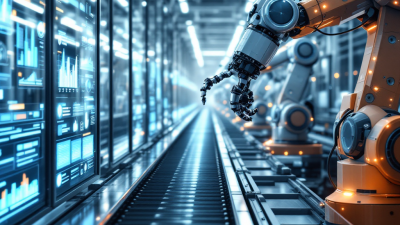
AI Agents in Manufacturing: Driving Efficiency and Innovation on the Factory Floor
In today’s rapidly evolving industrial landscape, the integration of artificial intelligence (AI) is no longer a distant prospect but a tangible reality drastically reshaping production processes. AI agents are increasingly at the heart of digital transformation initiatives within manufacturing, enhancing efficiency, predictive maintenance, quality control, and overall operational effectiveness. From traditional factories to high-tech assembly lines, AI’s influence is proving to be a game-changer for companies striving to optimize performance and maintain competitive advantage. In this blog post, we’ll explore how AI agents are revolutionizing the manufacturing sector, drawing on industry-leading examples and research to illustrate their transformative potential.
———————————————————————
Introduction to AI Agents in Manufacturing
As manufacturing ventures deeper into the digital era, AI agents have emerged as pivotal players in automating complex, data-intensive tasks. These intelligent systems are capable of executing decisions, monitoring machinery in real time, and even predicting when maintenance is required, thereby reducing downtime. By assimilating vast amounts of sensor data across operations, AI agents create a dynamic ecosystem where production lines are not only optimized for efficiency but also become self-adapting environments that learn and evolve with every process.
The technological sophistication of AI agents enables them to operate across a variety of applications: from routine quality checks to intricate process optimizations that were once deemed possible only through human intervention. This transition is fundamentally altering how businesses view factory operations—with AI agents acting as both the catalyst and the cornerstone for next-generation manufacturing. Companies are beginning to witness unprecedented levels of operational insight and performance metrics that herald a new era of smart, AI-driven production.
———————————————————————
Optimizing Production Processes with AI
Efficiency in production is at the core of manufacturing success. AI agents are now deployed to streamline operations, from inventory management to supply chain logistics, significantly reducing operational costs and boosting productivity. By analyzing production data in real time, these systems identify bottlenecks and provide actionable insights to improve workflow.
One notable example is the seamless integration of AI within complex manufacturing environments that automatically recalibrates machinery and reallocates resources to prevent delays. In many instances, AI-driven systems can autonomously adjust production variables based on current demand and operational capacity, which not only minimizes human error but also ensures that production targets are met more consistently.
Moreover, AI agents are increasingly collaborating with human operators in a synergistic approach—enhancing the decision-making process while reducing the overall burden on the workforce. This democratization of technology in a production setting contributes to a more resilient and flexible manufacturing process, where every component of the production line is fine-tuned for maximum efficiency.
———————————————————————
Predictive Maintenance: Minimizing Downtime
Manufacturing industries are increasingly reliant on machine intelligence to predict and prevent equipment failures. Predictive maintenance, powered by AI agents, is one of the most revolutionary applications in industrial operations. By continuously monitoring sensor data and applying machine learning techniques, AI systems foresee potential malfunctions before they escalate into costly breakdowns.
Siemens, for instance, has harnessed the power of AI-driven predictive maintenance to analyze real-time sensor data from equipment, resulting in a notable 25% reduction in unplanned downtime. This forward-thinking approach not only ensures continuous operation but also safeguards production schedules against sudden disruptions. For more detailed insights, see the Agentic AI overview on Wikipedia.
Similar successes are being witnessed across the industry—with companies like GE and Caterpillar making significant strides. GE’s application of AI in predictive maintenance has achieved a 20% decrease in downtime, while Caterpillar leverages sensor data to optimize maintenance schedules and improve equipment reliability. The overarching theme is clear: predictive maintenance powered by AI is indispensable to modern manufacturing, offering both cost savings and enhanced operational assurance.
———————————————————————
Enhancing Quality Control with Machine Learning
Quality control remains a critical factor in ensuring product reliability and customer satisfaction. Traditional inspection methods, typically reliant on human oversight, can be both time-consuming and prone to error. AI agents, empowered by advanced machine learning algorithms, are rapidly redefining quality control processes by automating the detection of defects and inconsistencies.
For instance, industry leaders like Toyota have incorporated AI-powered quality control systems that deploy neural networks to analyze product visuals, dramatically reducing defect rates by up to 40%. This modernization not only ensures higher product quality but also significantly reduces waste and rework costs. AI’s aptitude for pattern recognition and anomaly detection allows for a more consistent and replicable inspection process that far outperforms manual oversight.
Moreover, the scalability of AI-driven quality control systems means that manufacturers can apply these principles across multiple production lines and product variants, ensuring a homogenous quality standard throughout. This systemic elevation in quality contributes directly to enhanced brand reputation and operational precision.
———————————————————————
Case Study: Siemens’ Innovative Use of AI Agents
Among the luminaries driving AI adoption in manufacturing, Siemens stands out with its cutting-edge initiatives. Siemens’ integration of AI agents within its Industrial Copilot ecosystem showcases a futuristic light on autonomous process execution. The company has invested in systems that automate entire industrial processes with minimal human intervention—pushing productivity gains up to 50%.
Siemens’ strategy involves utilizing AI to monitor sensor data, predict equipment failures, and dynamically adjust production variables in real-time. This comprehensive approach has not only reduced unplanned downtime but also bolstered the overall efficiency of their manufacturing operations. Additionally, the successful deployment of such a system underscores the intrinsic value of AI agents in crafting smarter, safer, and more efficient manufacturing environments. More details about this innovative use can be reviewed in the Siemens Press Release from 2025.
———————————————————————
Tangible Benefits: Measuring Success in AI Integration
The adoption of AI agents in manufacturing is delivering measurable benefits in several key performance areas. Enhanced operational efficiency, significant cost reductions, and the minimization of production disruptions are just a few outcomes that highlight the success of AI integration.
Companies report tangible improvements such as:
• A noticeable reduction in unplanned downtime—often quantified as a percentage decrease in production interruption.
• Considerable cost savings resulting from optimized maintenance schedules and reduced repair expenses.
• A boost in production output due to smarter process orchestration and autonomous decision-making systems.
These benefits are not confined to theoretical projections; real-world applications across companies like BMW, Pfizer, and GE Aviation show substantial advancements. For example, BMW’s predictive maintenance solution prevented nearly 500 minutes of production disruption annually at its Regensburg plant, emphasizing how AI integration translates into concrete performance metrics. The implementation of AI thus emerges not just as an innovative upgrade but as an essential component for competitive advantage in the fast-paced manufacturing arena.
———————————————————————
Challenges and Considerations in Implementing AI
Despite its transformative benefits, integrating AI agents into manufacturing is not without challenges. Organizations must grapple with significant considerations, including data security, system integration complexities, and workforce adaptation. Successful AI adoption demands that manufacturers invest in robust data infrastructures and ensure that legacy systems are compatible with modern AI solutions.
Training and upskilling the workforce are critical components to mitigate resistance to technology adoption. Companies must foster environments where human operators and AI systems work together harmoniously, ensuring that the transition to automated processes does not disempower the existing labor force but rather augments their capabilities.
Moreover, ethical considerations, such as transparency in AI decision-making and safeguarding against potential biases in data processing, must be carefully managed. Companies like Pfizer and Bosch have navigated these complexities by establishing stringent protocols and continuous monitoring mechanisms to ensure that AI integration meets industry regulations and ethical standards. Addressing these challenges head-on with proactive planning is vital for realizing the full potential of AI in manufacturing.
———————————————————————
Future Trends in AI-Driven Manufacturing
The horizon of manufacturing is poised for even more profound transformations as AI technology continues to evolve. Emerging trends point towards greater levels of automation, deeper integration of IoT with AI, and the expansion of autonomous decision-making systems. Future manufacturing environments will likely see AI agents operating in a highly interconnected, cloud-based ecosystem, where real-time data flows seamlessly across global production networks.
Innovations in machine learning and computer vision are set to further enhance quality control processes, while advances in predictive analytics promise even more accurate forecasting of maintenance needs. Additionally, the integration of augmented reality (AR) with AI is expected to redefine operator interfaces, offering real-time assistance and immersive training scenarios on the factory floor. As these trends develop, traditional manufacturing operations will not only continue to improve in efficiency but will also achieve unprecedented levels of customization and scalability.
This exciting future, however, also calls for continued investment in research and development, as well as close collaboration between technology providers and manufacturing experts. The synergy between human creativity and AI-driven precision is set to unlock new paradigms of productivity, transforming manufacturing into a model of sustainability and innovation for decades to come.
———————————————————————
Conclusion: Embracing the Future of Manufacturing
AI agents are revolutionizing the manufacturing landscape, fostering significant advancements in production efficiency, predictive maintenance, quality control, and overall operational efficacy. As demonstrated by industry leaders such as Siemens, Toyota, GE, and others, the integration of AI in manufacturing is not merely an incremental improvement but a paradigm shift toward smarter, safer, and more adaptive production environments.
The journey towards full-scale AI adoption involves both exciting opportunities and critical challenges. Embracing these challenges through careful planning, investment in robust technologies, and continuous workforce development will be the key to unlocking the immense potential of AI-driven manufacturing. For organizations ready to take the plunge, the future promises enhanced competitiveness and an enduring edge in an increasingly digital industrial landscape.
As we stand on the cusp of this transformation, one thing is clear—the factories of tomorrow will be defined by intelligent systems that not only streamline operations but also drive innovation at every turn. Embracing AI today is the blueprint for a more efficient, resilient, and technologically empowered manufacturing future.