
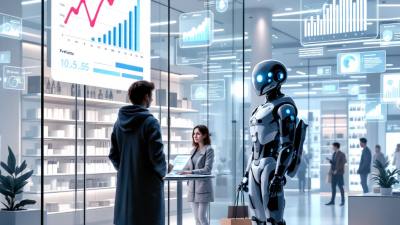
AI Agents in Retail: Personalizing Customer Experiences and Streamlining Operations
Introduction to AI Agents in Retail
The retail industry is undergoing a profound transformation, driven by the rapid evolution of artificial intelligence (AI) technologies. AI agents have seamlessly integrated into various aspects of retail, from the way customers interact with brands to how operations are managed behind the scenes. With capabilities that include personalized recommendations, real-time inventory tracking, and predictive supply chain management, these intelligent systems are reshaping the customer journey and enhancing operational efficiency. Companies like Walmart and Amazon are at the forefront of this revolution, demonstrating how thoughtfully implemented AI solutions can drive remarkable improvements in both customer engagement and internal processes.
Personalizing Customer Experiences with AI
Personalization is at the heart of creating memorable customer experiences in the digital age. AI agents can analyze complex datasets—spanning browsing behavior, purchase history, and even social media interactions—to deliver tailored product recommendations that resonate with consumers. Amazon, for instance, leverages sophisticated machine learning algorithms to sift through vast amounts of data in real time, ensuring that every customer sees products specifically curated to their preferences. This level of personalization not only increases engagement but also substantially boosts cross-selling and upselling opportunities. Similarly, retailers are deploying AI-powered chatbots to provide instant, context-aware assistance, thereby enhancing customer service and driving satisfaction. This strategy effectively bridges the gap between online and in-store experiences, giving modern consumers the feeling of being uniquely valued.
Case Study: How Walmart Utilizes AI for Customer Engagement
Walmart’s foray into AI-driven customer engagement exemplifies how legacy retailers can innovate to meet modern consumer demands. By implementing tools such as Walmart’s “Trend-to-Product” AI system, the company has drastically reduced the time required to bring new fashion items from concept to shelf—from six months to merely six weeks. This accelerated pace not only enables the company to rapidly respond to emerging trends but also ensures that customers have access to the latest styles when they are most relevant. Additionally, Walmart is exploring the use of AI-powered chatbots to handle customer inquiries and streamline the purchasing process, ensuring that shoppers receive immediate and personalized assistance. This dual approach—melding rapid product innovation with enhanced customer support—is a clear indicator of how AI can drive tangible retail results, as noted by insights from Axios.
Streamlining Operations through Inventory Optimization
Behind the scenes of every successful retail operation lies a finely tuned supply chain, and inventory management plays a pivotal role in this equation. AI agents excel in this domain by continuously monitoring stock levels, predicting replenishment needs, and optimizing logistics across multiple channels. Leveraging technologies such as computer vision, AI-driven robots can scan store shelves in real time, identifying low-stock items and flagging them for restocking. This level of automation minimizes manual errors, reduces the risk of stockouts, and ensures that retailers consistently meet consumer demand. Moreover, the integration of AI in these processes can lead to cost reductions and improved operational efficiencies, as evidenced by Walmart’s advanced inventory management systems. Insights from CNBC highlight how such initiatives are not just futuristic concepts but current realities transforming retail operations on a global scale.
Case Study: Amazon’s AI-Driven Inventory Management
Amazon has set a high benchmark in utilizing AI to masterfully manage inventory and logistics. With a keen focus on predictive analytics, Amazon employs AI models to forecast customer demand with exceptional accuracy, ensuring that products are always available and can be delivered in record time. This proactive management system not only strengthens Amazon’s reputation for reliability but also supports its ambitious delivery timelines—sometimes offering next-day or even same-day delivery. By integrating AI into its warehousing and logistics operations, Amazon has introduced robotic systems capable of performing tasks such as unloading trailers and managing stock movements. These innovations not only increase efficiency but also contribute to significant reductions in emissions and resource waste, a win-win scenario for both the company and the environment. For more detailed insights into Amazon’s transformative logistic strategies, refer to industry coverage by Reuters.
The Future of AI Agents in Retail
Looking ahead, the role of AI agents in the retail sector is poised to expand even further, fundamentally redefining how businesses interact with consumers and manage operations. As consumer expectations evolve, the demand for ultra-personalized shopping experiences will only increase. Future advancements may see AI agents becoming even more autonomous, using predictive capabilities not just to respond to, but to anticipate market trends and consumer behaviors. Innovations such as augmented reality (AR) combined with AI have the potential to revolutionize online shopping by creating immersive digital showrooms, while further refinements in robotics could bring about even more seamless inventory management solutions. Additionally, ethical AI practices and transparent data usage will emerge as critical concerns, prompting retailers to balance innovation with privacy and security responsibilities. This dynamic landscape calls for forward-thinking leaders ready to capitalize on AI’s vast potential while ensuring a human-centric approach to technology.
Conclusion: The Benefits of AI in Retail
The integration of AI agents into retail operations offers transformative benefits that extend far beyond improved customer interactions. By personalizing experiences through advanced data analytics, retailers can forge deeper connections with consumers, fostering loyalty and boosting sales. Simultaneously, AI-driven operational efficiencies, particularly in inventory management and supply chain logistics, ensure that businesses are agile and well-prepared to meet market demands. As demonstrated by the pioneering case studies at Walmart and Amazon, the effective deployment of AI not only strengthens competitiveness in a rapidly shifting marketplace but also drives sustainable growth. Embracing these technologies today sets the stage for an exciting, innovation-driven future in retail, where customer delight and operational excellence become the new standard.