
AI Agents in Supply Chain Management: Enhancing Efficiency and Resilience
Introduction to AI Agents in Supply Chain Management
Supply chain management stands at the forefront of operational complexity and global interconnectivity. Integrating AI agents into this field has unlocked new potentials, transforming traditional practices into dynamic, responsive systems. With the capacity to process vast amounts of data and provide actionable insights in real-time, AI agents streamline critical operations such as inventory management, demand forecasting, and disruption mitigation. As businesses seek to maintain competitiveness in an increasingly volatile market, AI-driven solutions offer not only efficiency gains but also enhanced resilience, ensuring that supply chains can adapt to unpredictable challenges.
The Need for AI in Modern Supply Chains
Modern supply chains operate in an environment where volatility, complexity, and rapid change are constant challenges. Conventional methods, often relying on linear processes and manual interventions, are no longer adequate to meet the demands of today’s market. The imperative for AI in supply chains comes from its potential to automate up to 80% of repetitive tasks, substantially freeing up human resources to concentrate on more strategic activities. Furthermore, advanced AI systems offer predictive insights that can reduce forecasting errors by 30-50% and improve operational efficiency significantly—as much as 30% improvement in logistics warehouses has been recorded, according to industry insights from SEO Sandwitch. This shift towards automation and precision is crucial in maintaining supply chain robustness while minimizing costs and errors.
Revolutionizing Inventory Management with AI
Inventory management has historically been a balancing act between understocking and overstocking. AI solutions have revolutionized this aspect by leveraging predictive analytics to improve inventory management accuracy by 35-50% as highlighted by research from WiFi Talents. With the advent of AI agents capable of sifting through complex data sets and historical trends, businesses can now anticipate inventory levels with unprecedented precision. By integrating machine learning algorithms that consider seasonal trends, market volatility, and variable demand, companies can reduce holding costs and ensure optimal inventory levels. AI-driven systems continuously monitor data flows and automatically adjust stock levels, thus aligning production schedules with real-time demand insights and avoiding costly inefficiencies.
Predicting Demand Fluctuations Using AI
Demand forecasting is critical for aligning production with market trends. Traditional methods often suffer from substantial inaccuracies due to unforeseen market shifts and external disruptions. AI agents harness the power of machine learning to refine these predictions, with studies showing improvements in forecast accuracy of up to 50% (Zipdo.co). By analyzing patterns in customer behavior, seasonal fluctuations, and global market trends, AI systems can provide early warnings of potential shifts in demand. Supply chain managers, armed with these predictions, are better equipped to adjust production rates, prevent overproduction, and reduce the risk of stockouts. This not only improves the bottom line by optimizing resource allocation but also enhances customer satisfaction by ensuring product availability.
Mitigating Disruptions in the Supply Chain
Supply chains are inherently susceptible to disruptions—ranging from natural disasters and geopolitical events to unexpected shifts in market demand. AI-driven predictive analytics offer a proactive approach to managing these risks. By forecasting potential issues with an impressive accuracy rate of 80% (Zipdo.co), AI systems empower organizations to establish contingency plans before issues escalate into full-blown crises. Moreover, AI-powered route optimization can reduce fuel consumption by up to 15%, which not only minimizes operational costs but also contributes to a greener, more sustainable logistics strategy. In essence, AI transforms risk management by shifting the focus from reactive responses to proactive preparedness, thus ensuring that the supply chain remains resilient in the face of unexpected challenges.
Case Studies: Walmart and DHL’s AI Implementations
Industry leaders such as Walmart and DHL are setting benchmarks in the application of AI within supply chain management. Walmart, for instance, leverages AI agents to refine its inventory systems, leading to highly efficient stock management and cost reduction. Through the integration of advanced forecasting and real-time data analytics, Walmart can manage its vast network of stores and warehouses more effectively, aligning supply with fluctuating demand seamlessly. Similarly, DHL has incorporated AI-powered logistics solutions to streamline its routing and operations. Their approach to using predictive analytics not only reduces planning cycle times by up to 50% (Zipdo.co) but also enhances overall operational agility. These case studies illustrate that when implemented correctly, AI agents can significantly boost efficiency, lower costs, and enhance supply chain resilience, providing a competitive edge that is difficult to match using traditional methods.
Challenges and Considerations for AI Adoption
Despite the robust benefits, integrating AI into supply chain management is not without its challenges. Businesses must address several crucial considerations, including data privacy concerns, the need for significant infrastructure investments, and the potential for job displacement due to increased automation. Furthermore, successful AI adoption demands a cultural shift within organizations, where leadership must be willing to invest in continuous learning and development to harness the full potential of these technologies. Companies need to carefully balance short-term disruptions during implementation with long-term gains. It is also important to ensure that data feeds are accurate and robust, as even minor errors in data quality can lead to significant miscalculations in AI-driven insights. Thus, a strategic approach that involves meticulous planning, stakeholder engagement, and continuous performance monitoring is essential for achieving success in AI integration.
The Future of AI in Supply Chain Management
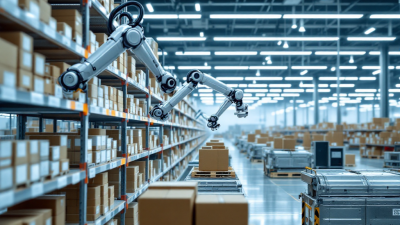
Looking ahead, the role of AI in supply chain management is poised to expand dramatically. As AI algorithms continue to evolve, their capacity to integrate complex, multi-dimensional data will further optimize supply chains, creating systems that are not only reactive but also predictive and adaptive. Future innovations are likely to include more pervasive use of AI-powered robots in warehouses, enhanced decision-support systems that integrate diverse data points from the entire supply chain, and even deeper integration of IoT devices to create a fully connected operational network. The combination of these advancements will lead to smarter, more agile supply chains capable of handling greater levels of complexity and unpredictability. The evolving landscape suggests that companies that invest in AI today will be better positioned to harness the economic opportunities of tomorrow, ultimately driving higher performance and sustainability throughout the supply chain.
Conclusion: Embracing AI for Greater Efficiency and Resilience
The transformative impact of AI agents in supply chain management is clear. By revolutionizing inventory control, enhancing demand forecasting, and mitigating disruptions through advanced predictive analytics, AI technology is setting new standards for efficiency and resilience in supply chains. Real-world examples from industry leaders like Walmart and DHL demonstrate that, when effectively deployed, AI can deliver substantial improvements in operational accuracy and cost savings. As supply chains continue to face unprecedented global challenges, embracing AI is not just an option but a necessity for businesses aiming to maintain competitive advantages. With strategic planning, robust data management, and a keen eye on emerging trends, companies can unlock the full potential of AI-driven solutions for a more efficient, resilient future.