
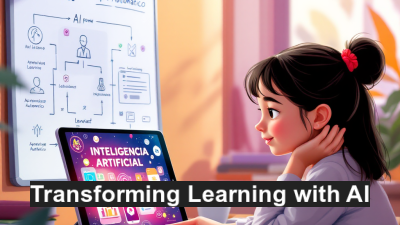
AI Agents in Education: Personalizing Learning Experiences
Introduction: The Rise of AI in Education
The education sector is undergoing a dramatic transformation. The incorporation of artificial intelligence (AI) agents is no longer a futuristic concept—it is an unfolding reality. AI technologies are revolutionizing how educators teach and how students learn. With cutting-edge algorithms and adaptive learning models, AI agents are personalizing learning experiences, automating administrative tasks, and providing real-time feedback that both educators and students can leverage for greater success. This digital transition is reshaping traditional educational methods and sparking debates on ethics, equity, and the future role of technology in our classrooms. From tailoring individualized lesson plans to streamlining cumbersome paperwork, AI is at the forefront of a revolution destined to redefine educational landscapes globally.
Personalized Learning Experiences: How AI Customizes Education
One of the most compelling benefits of AI in education is its ability to deliver personalized learning experiences. Every learner has a unique set of strengths, weaknesses, and interests, and AI-powered platforms are adept at identifying and responding to these individual differences. For instance, platforms like Squirrel AI Learning break down subjects into hundreds or even thousands of “knowledge points.” By analyzing each student’s progress, the system pinpoints specific learning gaps and customizes lesson plans to focus on those areas. This data-driven approach ensures that students receive instruction that is tailored precisely to their pace and learning style, leading to better engagement and improved comprehension. You can read more about the innovative approach of Squirrel AI on Squirrel AI.
Language learning apps, such as Duolingo, have also embraced the benefits of AI by offering dynamic lessons that adjust in complexity based on user performance. As learners progress, these platforms provide immediate feedback on pronunciation, grammar, and vocabulary. This means that students can practice, make mistakes, and improve in real time—leading to a more efficient and personalized learning trajectory. The integration of AI in personalized instruction is not only enhancing content delivery but also reimagining the very concept of mastery in education.
Automating Administrative Tasks: More Time for Teaching
Beyond personalized instruction, AI significantly reduces the administrative burdens that often weigh educators down. In many institutions, teachers spend countless hours on tasks that have little to do with actual teaching. With AI, these mundane tasks—from enrollment management to routine communications—are automated, allowing educators to focus on what they do best: teaching and mentoring.
Take Georgia State University, for example. The institution implemented an AI-driven chatbot named “Pounce” that guides students through the enrollment process. Pounce not only answers questions and issues reminders about deadlines but also helps reduce summer melt—a phenomenon where admitted students fail to enroll. This automated assistance streamlines operations and ensures that both students and staff benefit from a seamless administrative experience. You can learn more about the transformative role of AI in school administration through insights shared on AI in Education on Medium.
When administrative tasks are managed efficiently, teachers see more opportunities for engaging classroom experiences, fostering creative lesson planning, and dedicating additional time to student interactions. The automation of administrative procedures is a powerful testament to AI’s potential to enhance overall institutional efficiency.
AI-Driven Real-Time Feedback: Enhancing Student and Teacher Experience
Immediate, actionable feedback is central to effective learning. AI systems are now capable of providing real-time responses that empower both students and educators. For instance, AI platforms like Carnegie Learning’s MATHia analyze student interactions with problem-solving exercises, then offer instant feedback that keeps learners on track. This immediate error correction means that misconceptions are identified and addressed before they become ingrained habits. As a result, students achieve higher proficiency, particularly in challenging subjects such as mathematics.
The significance of real-time assessment extends to classroom management and curriculum adjustments as well. With AI-powered insights, teachers can track the progress of an entire class at a glance, allowing for timely interventions or modifications to ensure that all students are benefiting from the lesson. This not only enhances academic outcomes but also builds confidence in the learning process. Enhanced engagement and improved performance can be seen as students receive immediate feedback and adjust their strategies on the fly—a critical component in modern education.
Case Studies: Successful AI Integration in Schools
When it comes to practical applications, several case studies highlight the impressive ways in which schools and educational organizations are leveraging AI.
• Khan Academy’s Khanmigo:
Khan Academy has taken a bold step forward by launching “Khanmigo,” an AI-powered tutor that assists students in a multitude of subjects. This virtual tutor not only provides personalized support but also aids educators through data analysis and lesson planning, with the ambitious goal of boosting learning outcomes by 30% for at least 4 million students within five years. More details on this innovative initiative can be found on Khan Academy’s Khanmigo.
• Infinity Learn’s IL VISTA:
In October 2023, Infinity Learn introduced IL VISTA—an AI-driven learning platform that personalizes education through an AI-powered doubts resolution assistant and enhanced assessment tools. This platform not only elevates the learning experience but also supports educators by simplifying lesson planning and evaluations. Such platforms indicate a shift toward a more individualized and efficient learning model, with insights shared on Infinity Learn.
• Alpha School’s 2-Hour Learning Model:
Alpha School exemplifies an innovative approach to education by integrating AI tutors within a model that dedicates two hours a day solely to academic learning. The rest of the day is reserved for developing critical life skills, a balance that leverages the efficiency of AI to provide instruction without overburdening students. This model ensures that the learning process remains targeted and focused, optimizing both academic performance and holistic development. More about this groundbreaking model is available on Alpha School.
Challenges and Ethical Considerations: Balancing Technology with Humanity
Even as AI ushers in remarkable advancements, it also raises significant challenges and ethical questions. One of the foremost concerns revolves around data privacy. AI systems rely on vast amounts of personal data to tailor educational experiences and deliver real-time feedback. Educators, students, and institutions must work collaboratively to ensure that this data is managed securely and ethically.
Moreover, the digital divide remains a pressing issue. Not all educational institutions have equal access to advanced AI technologies, and there is a risk that enhanced learning experiences could become available only to a privileged few. Schools must balance the promise of personalized learning with the need for equity and accessibility.
Another ethical dimension is the need for transparency in AI decision-making processes. As AI becomes more integrated into everyday learning, it is crucial that both students and educators understand how these systems work and how decisions are made. This transparency is vital for maintaining trust and ensuring that technology serves as an adjunct to human decision-making rather than a replacement. The broader implications of these ethical concerns are discussed in several recent articles, including perspectives on AI for students with disabilities presented on AP News and insights from the business education sector on Financial Times.
Future Trends: What’s Next for AI in Education?
The future of AI in education promises even greater advancements. Adaptive learning platforms continue to evolve, utilizing increasingly sophisticated AI algorithms to not only monitor student performance but also predict potential challenges before they become problematic. Future systems may offer hyper-personalized learning modules, where every aspect of the educational journey is tailored in real time.
Furthermore, as AI becomes more integrated into daily classroom activities, we can expect a surge in hybrid learning models that combine traditional teaching methods with dynamic AI support. These models could revolutionize the role of teachers, shifting from being the primary source of information to functioning more as facilitators of critical thinking and analytical skills—the human touch that remains indispensable in education.
The role of AI in fostering inclusive education is also gaining attention. Innovative AI applications are being developed to assist students with disabilities, ensuring that learning is accessible for all. For instance, personalized AI tutors are being designed to provide additional support for those who need it the most, driving forward a more equitable educational landscape. This emerging trend is further explored in discussions on Axios.
Conclusion: Embracing the Future of Learning with AI
AI agents are poised to continue their profound impact on education, reshaping everything from classroom instruction to administrative procedures. The promise of personalized learning, underpinned by precise data analytics, offers a transformative approach that addresses individual student needs and maximizes learning potential. At the same time, the automation of routine tasks promises to liberate educators from administrative bottlenecks, ensuring that more time and energy are devoted to creative, impactful teaching.
As the adoption of AI grows, it is crucial for educators and policymakers to navigate the accompanying ethical and practical challenges cautiously—striking a balance between harnessing technology’s transformative power and preserving the human essence of education. By keeping these concerns in check, we can embrace a future where AI enhances every facet of the learning experience while reaffirming our commitment to equity, transparency, and the nurturing of human potential.
Ultimately, the evolution of AI in education is not just about technology—it’s about redefining the possibilities of learning, teaching, and growing together in an increasingly digital world. The future is bright, and with thoughtful integration, AI will continue to empower both educators and students to achieve excellence.