
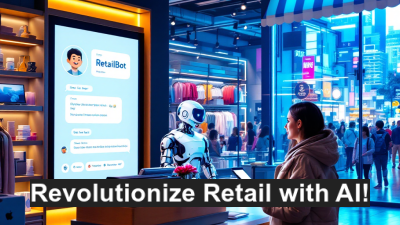
AI Agents in Retail: Enhancing Customer Experience and Operational Efficiency
Retail is in the midst of a transformative revolution fueled by Artificial Intelligence (AI). As customer expectations evolve and competition intensifies, retailers are increasingly turning to AI agents to stay ahead of the curve. In this comprehensive post, we explore how AI is reshaping the retail landscape—from personalizing customer interactions to optimizing inventory management and streamlining operations. By diving deep into success stories like that of Zara, we illustrate the remarkable benefits of AI-driven strategies that are setting new benchmarks for excellence in retail.
────────────────────────────
Introduction to AI in Retail
Artificial Intelligence is rapidly emerging as a linchpin in modern retail. It is not just about automating repetitive tasks; it’s about creating a seamless shopping experience that can adapt to real-time trends and customer preferences. Retailers are using AI to sift through massive amounts of data—from social media chatter and fashion blogs to historical purchase behaviors—in order to predict trends and make informed decisions.
At its core, AI in retail is about driving value at every point of the customer journey. This includes empowering personalized marketing campaigns, predictive inventory restocking, dynamic pricing models, and even in-store operations. Retailers are discovering that with the right AI tools, they can minimize waste, optimize resource allocation, and create a more engaging shopping experience that fosters long-term loyalty. As the industry continues to innovate, expect AI to unlock ever greater efficiencies and consumer insights, ensuring that those who embrace these tools today lead tomorrow’s markets.
────────────────────────────
Personalizing Customer Interactions
One of the most visible ways in which AI is reshaping retail is through personalized customer interactions. Brands like Zara are setting the standard for how AI can translate big data into tailor-made shopping experiences. Zara leverages AI to monitor and analyze vast volumes of information from social media platforms, fashion blogs, and customer reviews. This constant stream of data allows the brand to swiftly identify emerging trends. For example, if images of oversized blazers begin trending online, AI systems flag this trend, prompting rapid adjustments in design and production pipelines. Such agile responses ensure that stores are stocked with the styles that shoppers are actively seeking, drastically reducing the time between trend identification and product launch. Learn more about this innovative approach from Zara’s Use of AI to Stay Competitive in Fast Fashion.
In addition to trend analysis, Zara has integrated AI-powered visual search technology into its mobile app. This tool allows customers to snap a photo of an item they like and search for similar products without needing to use text-based inquiries. This technology not only simplifies the shopping process but also significantly enhances the user experience by bridging the gap between online inspiration and in-store or online offerings. AI’s ability to interpret visuals and correlate them with inventory data means that customers receive highly curated results, making their shopping journey intuitive and efficient. For more insights into these advancements, check out Artificial Intelligence at Zara.
────────────────────────────
Optimizing Inventory with AI
Efficient inventory management is critical to operational success in retail, and AI is revolutionizing this area with unprecedented accuracy and speed. Zara’s pioneering use of technology exemplifies how traditional inventory challenges can be overcome through AI ingenuity. One of the key innovations is the integration of microchips in security tags on every clothing item. This sophisticated microchip system provides real-time tracking from production to sale, offering precise visibility over stock at every stage. The result is a dramatically reduced incidence of overstocking and stockouts, ensuring that popular items are always readily available while minimizing waste from unsold inventory. Read more about this breakthrough in inventory tracking from The Inditex Way: Achieving Success with AI in Fast Fashion.
Beyond physical tracking, AI-powered inventory management systems continuously analyze sales data and customer behavior to determine restocking needs. For example, if a particular product rapidly sells out in a high-demand market like London, the system quickly identifies alternative locations with surplus stock and orchestrates a seamless reallocation. This dynamic repositioning of inventory not only sustains sales momentum but also deepens customer satisfaction by ensuring availability when and where it matters most. This smart orchestration of stock across multiple locations exemplifies the strategic advantage of AI in managing retail inventories efficiently.
────────────────────────────
Streamlining Retail Operations
Operational efficiency is the backbone of any successful retail operation, and AI is playing an increasingly significant role in driving this efficiency. Zara has been at the forefront of this revolution by integrating AI-driven solutions designed to expedite critical operational processes. One notable innovation is the implementation of AI-powered robots as part of its Buy Online, Pick-Up In-Store (BOPIS) service. Here’s how it works: after placing an order, a customer retrieves a unique PIN and barcode, which is then used by the in-store AI robot to locate and deliver the order from storage to the collection point. This not only slashes wait times but also optimizes staffing by automating routine tasks. For further details, see the case study on Robotics In Retail– How Zara Uses AI & Robotics To Automate Order Pickup.
Additionally, Zara utilizes partnerships with predictive analytics platforms, such as Jetlore, to gain deep insights into customer behavior. By mapping consumer actions to predictive attributes like preferred sizes, colors, fits, and styles, the company can refine its offerings to precisely match demand patterns. This data-driven approach enables not only a proactive management of stock levels but also the delivery of personalized shopping recommendations that improve both online and offline experiences. Incorporating AI across operations ensures that each component—from storage to sales floor—is synchronized for maximum efficiency, thereby creating a more agile and responsive retail environment.
────────────────────────────
Case Study: Zara’s AI Journey
Zara’s journey with AI is a compelling case study in how technology can serve as a catalyst for both customer satisfaction and operational efficiency. Zara’s approach is multi-faceted: from using AI for real-time trend analysis and visual search technology to implementing microchip-enabled inventory tracking and robotics for customer service enhancements. This comprehensive integration of AI across various aspects of its business model has allowed Zara to not only quickly adapt to shifting market trends but also maintain a robust supply chain that keeps pace with consumer demand.
The strategic use of AI at Zara demonstrates tangible benefits. By reducing the gap between trend identification and product launch, the brand remains at the cutting edge of fashion. Its inventory management practices ensure that products are available where they are needed, preventing lost sales due to stockouts and reducing excess inventory. And by streamlining operations through robotics and predictive analytics, Zara has significantly shortened service times and improved the overall shopping experience. Retailers looking to harness AI can draw lessons from Zara’s model, which serves as a benchmark in the industry. Comprehensive insights into this journey are available through detailed reports such as Case Study: Zara’s Use of AI to Stay Competitive in Fast Fashion.
────────────────────────────
The Future of AI in Retail
Looking ahead, the potential for AI in retail appears boundless. As technology continues to evolve, future AI applications will likely go far beyond the current functionalities we see today. Predictive analytics will become even more sophisticated, offering deeper insights into consumer behavior and even enabling highly personalized marketing at a granular level. With advancements in machine learning and neural networks, AI could predict not only what a customer might want to buy next, but also when they are most likely to make a purchase, allowing for hyper-personalized and timely offers.
Moreover, the growing adoption of smart devices and Internet of Things (IoT) in retail spaces is set to create an ecosystem where in-store experiences are seamlessly integrated with online channels. Imagine a future where AI-powered sensors and beacons guide customers through stores, suggest complementary products in real-time, and even facilitate frictionless checkout experiences—all tailored to an individual’s unique preferences.
Ethical considerations and data privacy will also be at the forefront of AI development in retail. As brands gather more personal data to fuel these intelligent systems, establishing robust frameworks for data security and ethical AI usage will be critical. This balance between personalization and privacy will define the next generation of AI adoption in the retail space.
In summary, the journey of AI in retail is just beginning. Companies like Zara are paving the way, demonstrating how technology can be implemented to create smarter, more agile, and customer-centric operations. Retailers worldwide that embrace AI-driven innovations will not only enhance operational efficiency and customer satisfaction but also set the stage for a future where the shopping experience is more intuitive, responsive, and engaging than ever before.
────────────────────────────
Conclusion
The power of AI in retail lies in its ability to transform every facet of the industry—from understanding customer behavior and optimizing inventory to revolutionizing in-store operations via automation. Zara’s impressive journey exemplifies how integrating AI technologies can yield measurable benefits, from shortening design-to-shelf cycles to elevating the overall shopping experience. As we look forward to a future energized by more capable and ethically-sound AI, retailers must consider not just the technological advancements, but also the strategic implementation of these tools to drive growth, efficiency, and sustained customer loyalty.
By embracing AI agents, retail businesses have the opportunity to redefine their operational models and deliver a customer experience that is unparalleled in speed, personalization, and convenience. The next wave of retail innovation is here—and it’s driven by AI.