
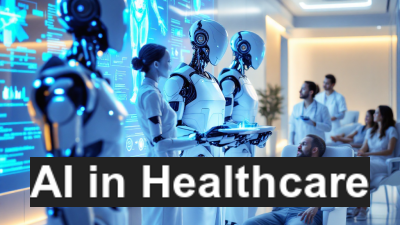
AI Agents in Healthcare: Revolutionizing Patient Care and Administrative Efficiency
Introduction to AI in Healthcare
The healthcare industry is undergoing a profound transformation thanks to advances in artificial intelligence. AI agents are not only reshaping how care is delivered but are also streamlining administrative processes and enhancing diagnostic accuracy. With the integration of AI technologies, hospitals and clinics worldwide are now better equipped to manage patient data, predict clinical outcomes, and improve overall patient satisfaction. In this blog post, we delve into how AI is revolutionizing patient care and administrative workflows, examine successful case studies from healthcare institutions, and explore what the future holds for AI innovations in medicine.
Improving Patient Outcomes with AI
One of the most significant contributions of AI in healthcare is its impact on patient outcomes. AI-driven systems are now able to analyze vast amounts of data to identify high-risk patients and facilitate timely interventions. For example, the UK-based company C2-Ai has developed an AI-powered system that processes a dataset of about 500 million global patient cases. This advanced system assesses individual patient risks, enabling healthcare providers to implement prehabilitation measures that have led to an impressive sixfold reduction in complications and a halving of readmission rates for roughly 2,000 patients in Cheshire and Merseyside. By proactively identifying patient risks, AI empowers clinicians to tailor interventions that substantially improve recovery rates and overall patient health. More detailed insights on these advancements can be found in the FT article on AI-generated advice in surgery.
Streamlining Administrative Tasks
Beyond clinical care, AI is making significant inroads into streamlining administrative tasks. Managing extensive patient records, coordinating appointments, and ensuring the efficient flow of information have always been challenging in the healthcare industry. Innovative solutions like Laguna Insight, developed by Laguna Health in Tel Aviv and New York, are now transforming how these tasks are accomplished. This AI system automatically summarizes key patient information before calls and offers real-time insights into conversation nuances such as empathy and language appropriateness, greatly reducing the administrative burden on healthcare workers. By integrating AI-driven administrative tools into everyday operations, hospitals can ensure staff are better supported, enabling them to focus on what truly matters: patient care. Additional perspectives on the positive impact of AI on administrative workflows are described in this Time article on supporting healthcare workers.
Enhancing Diagnostic Accuracy
Improving diagnostic accuracy is another critical area where AI is making transformative strides. AI-powered diagnostic systems are now assisting healthcare professionals in making precise and timely decisions. For instance, a study conducted by Mass General Brigham found that ChatGPT achieved a 72% accuracy rate in clinical decision-making, including the process of diagnosing and devising care plans. This demonstrates that even advanced language models can provide meaningful support to clinicians, especially in environments where rapid decision-making is vital.
AI’s abilities in diagnostics extend across various specialties. Google’s DeepMind system, for example, has shown remarkable success in the field of ophthalmology by detecting over 50 sight-threatening eye conditions with a 94% accuracy rate—comparable to top retinal specialists. In skin cancer detection, a Stanford-developed algorithm analyzed 129,450 clinical images and outperformed dermatologists in identifying malignant lesions. IBM’s Watson for Oncology brings a personalized approach by sifting through thousands of medical journals and clinical trials to aid physicians at institutions like Memorial Sloan Kettering Cancer Center in creating tailored treatment plans. These developments highlight AI’s potential to enhance diagnostic precision and support physicians in navigating complex clinical scenarios, as elaborated in the Gilcare study on AI in medical diagnostics and complemented by insights in the Axios report on ChatGPT in medicine.
Case Studies of AI Implementation in Hospitals
Real-world integration of AI technologies in hospitals is already demonstrating its substantial benefits. Aidoc Medical, an innovative Israeli tech company, has developed computer-aided triage and notification systems that are FDA-approved and CE-marked for a range of conditions—ranging from stroke detection to identifying pulmonary embolism. These AI systems are now in use in over 900 hospitals and imaging centers, including institutions such as Montefiore Nyack Hospital and Yale New Haven Hospital. By enhancing the speed and accuracy of diagnostic processes, Aidoc’s technology is not only saving valuable time for clinicians but is also contributing to improved patient outcomes through quicker interventions. These successful implementations are a testament to the reliability and potential of AI in clinical settings, as detailed in Aidoc’s Wikipedia entry.
Future Innovations in Healthcare AI
Looking ahead, the future of AI in healthcare appears profoundly promising. Innovations in AI-driven predictive analytics are set to further transform how hospitals allocate resources by accurately forecasting patient admissions with an 87% accuracy rate. Such capabilities allow healthcare providers to anticipate demand, thereby optimizing staffing levels and resource distribution in real time. Furthermore, AI algorithms are making significant contributions to the early detection of critical conditions such as sepsis in hospitalized patients, with early intervention strategies reducing mortality rates by 23%.
These advancements signal a shift toward more proactive and personalized patient care. Future AI breakthroughs may include even more refined diagnostic tools, enhanced patient monitoring systems, and continuous integration with healthcare IoT devices—all aimed at delivering tailored treatments that address individual patient needs more effectively. The continued evolution of AI in the medical field promises not only to address current challenges but also to pave the way for a new era of healthcare innovation. For a deeper dive into how these technologies are set to redefine healthcare delivery, refer to the Zipdo research on AI in the medical industry.
In Conclusion
AI agents are undoubtedly revolutionizing healthcare by significantly enhancing patient care, streamlining administrative workflows, and improving diagnostic accuracy. From reducing complications and readmission rates to managing administrative burdens and offering unprecedented diagnostic support, AI is steadily reshaping the landscape of modern healthcare. Successful case studies, such as those from Aidoc Medical and the innovative systems developed by C2-Ai and Laguna Health, underscore the tangible benefits that AI brings to the clinical environment. As we look forward to the future, the integration of AI-driven predictive analytics and early detection systems heralds a new era of proactive, personalized healthcare that promises safer, faster, and more accurate patient care.