
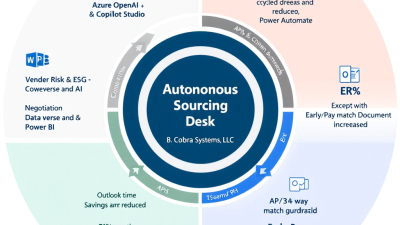
Autonomous Sourcing Desk: AI Agents that Run RFPs, Score Vendors, and Police 3‑Way Match Exceptions
The Procurement Force Multiplier: Why an Autonomous Sourcing Desk Now
Procurement teams are being asked to do more with fewer people, tighter SLAs, and tougher compliance demands. The timing for an autonomous sourcing desk—AI agents orchestrating RFPs, supplier risk, negotiation, scoring, and AP exception resolution—couldn’t be better. In The Hackett Group’s latest outlook, 61% of procurement organizations expect generative AI to have a moderate-to-high impact within 1–2 years, underscoring immediate applicability for AI-driven sourcing and AP workflows (Hackett Group 2024 Key Issues Study). High performers are already leaning in: Deloitte finds top procurement organizations are 2.9x more likely to deploy AI and advanced analytics at scale, linking adoption directly to outperformance in speed and value delivery (Deloitte Global CPO Survey).
On the back end, accounts payable is teeming with untapped savings. Manual invoice exception rates average 19–27%, and best-in-class AP teams process invoices 2.5x faster with dramatically lower processing costs when automation takes over (Ardent Partners AP Metrics That Matter). Put simply: AI agents embedded in procurement automation are not a futuristic nice-to-have—they’re a present-day force multiplier for cycle time, savings, and control.
What an AI Sourcing Desk Actually Does: From Intake to Invoice
Think of the sourcing desk as a coordinated team of AI agents, each specializing in a step of the source-to-pay journey, with human oversight where judgment matters most.
– Intake: Capture business demand, clarify requirements, and route to sourcing paths (refresh contract, spot buy, or full RFP).
– RFP automation: Draft scope, requirements, and scoring rubrics from policies and templates; coordinate posting and supplier invites. Organizations using AI for RFP tasks report 30–50% faster turnaround and better outcomes—principles now translate cleanly to buyer-side automation (Loopio State of RFP; RFPIO).
– Supplier risk and ESG: Enrich suppliers with risk and ESG data; screen for policy thresholds; maintain auditable evidence amid tightening laws like EU CSRD and supply-chain due diligence regimes (EU CSRD overview; McKinsey on Scope 3).
– Negotiation: Analyze proposals, benchmark pricing, recommend levers, and draft counter-terms with human-in-the-loop approvals. GenAI can reduce sourcing cycle times 20–40% when coupled with structured playbooks (BCG on GenAI in Procurement).
– Scoring and award: Coordinate stakeholder scoring with weighted models, document rationale, and keep an audit-ready trail.
– 3‑way match and exceptions: Align PO, receipt, and invoice data; classify exceptions; trigger corrective actions. This is where you convert operational rigor into cash by clearing blockers to capture early‑pay discounts (best-in-class capture 80%+ vs. 20–30% typical) (Ardent ePayables benchmarks).
Reference Architecture on Microsoft Power Platform (Dataverse, Power Automate, Power Apps, Copilot Studio, Azure OpenAI, Power BI)
The most practical path to an AI-agent sourcing hub is Power Platform-first. It’s fast to deploy, enterprise-ready, and plays nicely with ERP and procurement systems.
– Dataverse: The system of record for RFPs, suppliers, ESG scores, proposals, evaluations, POs, receipts, invoices, exceptions, and audit logs.
– Power Apps: Buyer and stakeholder workspaces for intake, approvals, scoring, and exception remediation.
– Power Automate: Orchestration of RFP workflows, vendor invites, SLA timers, and 3‑way match jobs, including document parsing with AI Builder/Document Intelligence (AI Builder Document Processing; Power Automate overview).
– Copilot Studio: The “brains” for agents that reason over policies, draft content, call flows, and take actions across Dataverse and connectors. Microsoft introduced agent capabilities that can orchestrate multi-step business processes—ideal for procurement scenarios (Copilot Studio agents).
– Azure OpenAI: Secure LLM runtime for drafting, analysis, and negotiation assistance; customer data isn’t used to train the models, supporting enterprise and SMB compliance needs (Azure OpenAI data privacy).
– Power BI: KPI dashboards for cycle time, touchless rates, exception resolution, and discount capture.
– Governance: DLP policies, environment strategy, and Purview data lineage for end-to-end oversight.
Designing Your Agent Team: Orchestrator, RFP Writer, Vendor Risk Analyst, Negotiator, Scoring Coordinator, AP Exception Resolver
– Orchestrator: Monitors intake, assigns agents, tracks SLAs, and escalates to humans at decision points.
– RFP Writer: Drafts SOWs, requirement lists, and evaluation rubrics using policies and past RFPs as grounding.
– Vendor Risk Analyst: Enriches suppliers with ESG/risk data, applies thresholds (e.g., CSRD/Scope 3 relevance), and flags remediation paths (EU CSRD; Scope 3 impact).
– Negotiator: Compares proposals, benchmarks terms, suggests counters, and drafts emails/clauses for approval (BCG insight).
– Scoring Coordinator: Manages scoring windows, collects stakeholder inputs, normalizes weights, computes scores, and logs rationale.
– AP Exception Resolver: Classifies 3‑way match exceptions, proposes fixes (e.g., price variance, missing receipt), triggers corrective actions, and rechecks for discount eligibility (Ardent AP benchmarks).
RFP Intake and Drafting: Templates, Policies, and AI-Prompted Requirements
Start with a structured intake in Power Apps: business need, budget, timeline, mandatory suppliers, and technical/ESG requirements. Store policy text, approved templates, and preferred terms in Dataverse. The RFP Writer agent, powered by Azure OpenAI and Copilot Studio, should:
– Generate first-draft RFPs from category templates and past successes.
– Prompt requesters for missing details (“Specify data retention,” “Define uptime SLAs,” “Include supplier ESG reporting needs under CSRD”).
– Auto-build evaluation criteria with weighted scoring tied to business outcomes.
– Draft supplier Q&A and disclosure requests (security, data residency, sustainability attestations).
AI-assisted RFP creation consistently speeds cycles; vendors on the sell-side report 30–50% faster RFP work with AI, a dynamic buyers can leverage for drafting, clarification, and scoring (Loopio; RFPIO).
Supplier Discovery and Prequalification: Enrichments, ESG/Risk Scores, and Data Connectors
To vet suppliers at scale, combine internal vendor master data with external ESG and risk sources. With supply-chain due diligence heating up and networks like EcoVadis assessing 130,000+ companies, continuous monitoring is the new normal (EcoVadis network growth). Why it matters: for many organizations, 80–90% of emissions are Scope 3, so supplier selection directly impacts your sustainability posture (McKinsey Scope 3).
Implementation tips:
– Build Dataverse tables for Supplier, RiskProfile, ESGScore, Certifications, and Sanctions.
– Use connectors or custom APIs to pull third-party ratings; store snapshots for audit.
– The Vendor Risk Analyst agent enforces thresholds (e.g., no award if ESG score < X without approved mitigation) and creates tasks for remediation.
Negotiation Playbooks with Human-in-the-Loop: Email, Teams, and Approval Gates
Negotiation is a sweet spot for AI agents when bounded by playbooks:
- Analyze variance against target price, payment terms, warranty, and data protection clauses.
- Recommend levers (volume breaks, multi-year commitments, delivery flexibility) and draft counteroffers.
- Use Teams or email to run pre-approved sequences, with required human approval for counters above a risk threshold.
- Document every revision, rationale, and approval to a Dataverse audit log for compliance.
With structured playbooks, AI can shrink cycle times materially while preserving control and transparency (BCG GenAI research).
Scoring Model: Weighted Criteria, Stakeholder Reviews, and Transparent Audit Trails
Design a scoring framework that is rigorous and explainable:
– Criteria: Technical fit, total cost of ownership, ESG/risk score, implementation plan, references, and service SLAs.
– Weights: Align to business priorities; the Scoring Coordinator aggregates reviewer inputs and normalizes outliers.
– Evidence: Require reviewers to anchor scores to proposal excerpts; the agent can highlight relevant passages to accelerate review.
– Transparency: Publish the scoring rubric and final weighted scores; retain immutable snapshots for audit.
Fast, structured scoring aligns with what high-performing procurement teams achieve through analytics at scale (Deloitte CPO Survey).
3‑Way Match Autopilot: PO–Goods Receipt–Invoice Alignment, Exception Classification, and Root-Cause Loops
Exception rates are stubbornly high when matching is manual. Power Automate, combined with AI Builder/Document Intelligence, can extract invoice data, compare it against PO and receipt records (from Dataverse or ERP), and flag discrepancies automatically (AI Builder; Power Automate). The AP Exception Resolver agent then:
– Classifies exceptions: quantity variance, price variance, missing receipt, duplicate invoice, tax/miscoding.
– Proposes actions: request revised invoice, trigger receipt entry in warehouse, create PO change order, or initiate dispute.
– Routes to the right human with context, and rechecks the match upon remediation.
– Logs recurring issues to a root-cause report (e.g., specific supplier or item codes), improving upstream data quality.
Given average exception rates of 19–27%, closing this loop is one of the fastest ROI levers (Ardent AP Metrics).
Early‑Pay Discounts and Dynamic Payment Terms: Triggering Policy-Based Actions
Cash is a strategy, not just a balance. Best-in-class AP capture 80%+ of early‑pay discounts, compared to 20–30% for typical organizations (Ardent ePayables benchmarks). Your agents should:
– Identify invoices eligible for dynamic discounting once a clean 3‑way match is achieved.
– Tie exception SLAs to discount windows; auto-escalate when the window is at risk.
– Simulate net present value of taking the discount versus preserving cash.
– Propose and route discount acceptance based on policy and cash goals.
Data and Security Foundations: Dataverse Tables, DLP Policies, RBAC, and Purview Lineage
– Dataverse schema: RFP, Requirement, Supplier, Proposal, Evaluation, RiskProfile, ESGScore, Contract, PurchaseOrder, GoodsReceipt, Invoice, MatchResult, Exception, DiscountOpportunity, AuditLog, Policy, Template.
– Security: Role-based access control with field-level security for pricing and confidential terms; environment strategies separating dev/test/prod.
– DLP: Block unsanctioned connectors from sensitive environments.
– Data lineage: Use Microsoft Purview to map data flows from intake through award and payment for auditability.
– LLM guardrails: Use Azure OpenAI in Microsoft’s enterprise-grade environment with the assurance that customer data isn’t used to train the models (Azure OpenAI privacy commitments).
Operational Guardrails: Prompt Controls, Grounding with Retrieval, and Audit Logging
– Grounding: Retrieve policy clauses, templates, and prior RFPs from Dataverse or approved repositories and pass them to the model to avoid hallucinations.
– Prompt governance: Standardize system prompts with explicit scope, tone, and compliance rules; version prompts in Dataverse.
– Content filters: Apply safety filters and redaction for PII in prompts/responses.
– Human-in-the-loop: Force approvals at checkpoints (RFP release, negotiation counter, award recommendation, invoice write-off).
– Audit: Store every agent action, prompt, retrieved sources, and result in an immutable AuditLog for compliance.
KPIs and ROI Model: Cycle‑Time Reduction, Sourcing Savings, Touchless Rate, Exception Resolution Time
To make the business case stick, track:
– Sourcing cycle time (intake-to-award)
– Percentage of automated RFP content and communications
– Supplier shortlist time and risk clearance rate
– Evaluation throughput and on-time score submissions
– AP touchless rate and exception resolution time
– Early‑pay discount capture and realized savings
– Stakeholder NPS
World-class procurement runs at lower operating cost while delivering greater value through digitization—set your baseline and show the delta as automation scales (Hackett World-Class Procurement). Tie benefits to real money: reduced cycle time unlocking project value sooner, higher discount capture, fewer overpayments, and fewer expedite fees. Ardent’s data on processing speed and cost reduction helps quantify upside for AP specifically (Ardent AP Metrics).
Build the MVP in 30–60–90 Days: A Phased Power Platform Delivery Plan
Day 0–30 (MVP)
– Scope: 1–2 categories, 5–10 suppliers, 1 ERP integration path.
– Build: Intake app, Dataverse schema, RFP Writer agent grounded on 2–3 templates, Scoring Coordinator with weighted model, basic dashboards.
– AP: AI Builder invoice extraction, 3‑way match flow, exception classification, and manual remediation tasks.
– Governance: RBAC, DLP, Purview lineage, audit logging.
Day 31–60 (Pilot Expansion)
– Add Vendor Risk Analyst agent with ESG/risk enrichments and thresholds.
– Introduce Negotiator agent with playbooks and approval gates via Teams.
– Expand ERP integration and contract repository links; add early‑pay discount logic.
– User training and feedback loops; refine prompts and rubrics.
Day 61–90 (Scale and Harden)
– Touchless exceptions for low-risk variances with policy limits.
– Multi-category roll-out; more suppliers; SLA timers and auto-escalations.
– Power BI executive dashboards; KPI instrumentation across source-to-pay.
– Change management and operating model adjustments.
Integration Patterns: ERP (Dynamics 365/NetSuite/SAP), Contract Repositories, Doc Intelligence, and e‑Signature
– ERP: Use native connectors for Dynamics 365 and Business Central; for SAP/NetSuite, use certified connectors or custom APIs. Synchronize Vendors, POs, Receipts, and Invoices into Dataverse for matching and analytics.
– Contract repositories: Integrate SharePoint/OneDrive or third-party systems; tag clauses and metadata for retrieval grounding in negotiations.
– Document Intelligence: Use AI Builder to extract header/line-level invoice data and receipts for 3‑way match (AI Builder prebuilt models).
– e‑Signature: Trigger DocuSign/Adobe Sign flows from award through contract execution.
– Collaboration: Teams-based approvals and Q&A logging, ensuring actions map back to Dataverse records.
SMB-Friendly Options: Low-Code Accelerators, Cost Controls, and Out-of-the-Box Connectors
– Start small with category templates, basic scoring, and standard connectors; avoid custom code until ROI is clear.
– Use Dataverse capacity wisely; archive closed RFPs and invoices to keep costs predictable.
– Leverage Copilot Studio agents to reduce manual drafting without heavy dev investment (Copilot Studio agents).
– Azure OpenAI’s enterprise privacy stance helps SMBs meet customer expectations without standing up separate AI infrastructure (Azure OpenAI privacy).
Scaling Up: Category Playbooks, Multi-Region Compliance, and Supplier Collaboration Portals
– Category playbooks: Codify category-specific requirements, KPIs, and negotiation levers into agent prompts and templates.
– Globalization: Localize clauses for data residency, labor, and environmental rules; apply region-based approval gates.
– Supplier portals: Provide guided response forms, status tracking, and self-service profile/ESG updates; auto-ingest into Dataverse.
– Proven at scale: Enterprises like Siemens show how Power Platform can support thousands of governed automations on Dataverse, a pattern transferable to procurement hubs (Microsoft Siemens customer story).
Risk and Compliance: SOC 2/ISO Evidence Capture and Procurement Policy Enforcement
– Capture evidence: Store negotiation dialogues, clause justifications, and risk assessments in immutable logs.
– Policy enforcement: Agents block noncompliant awards (e.g., ESG score below threshold) unless a documented waiver is approved.
– CSRD/Scope 3: Maintain supplier ESG data lineage for reporting and assurance (CSRD; Scope 3).
– Data handling: Keep sensitive supplier pricing and terms in secure environments; use Azure OpenAI’s enterprise safeguards (Azure OpenAI privacy).
Change Management: Buyer Enablement, Supplier Onboarding, and Adoption Tactics
– Train buyers on when to trust the agent and when to intervene; celebrate time saved and wins achieved.
– Provide suppliers with clear guidance on the new process; offer a simple portal and SLA transparency.
– Establish office hours, champions, and a feedback backlog; iterate playbooks and prompts every sprint.
– Keep humans in the loop for awards, escalations, and exceptions with financial impact.
How B. Cobra Systems, LLC Implements This Pattern: Packages, Timeline, and Next Steps
We implement autonomous sourcing desks as a Power Platform-first program, tuned for SMBs and enterprises alike.
– Assessment and Blueprint (2–3 weeks): Current-state process mapping, data inventory, and ROI model anchored to Ardent, Hackett, and Deloitte benchmarks (Ardent Partners; Hackett; Deloitte).
– MVP Build (4–6 weeks): Dataverse schema, intake app, RFP Writer and Scoring Coordinator agents, 3‑way match flow with AI Builder, initial dashboards.
– Pilot Expansion (4–6 weeks): Vendor Risk Analyst agent with ESG thresholds, Negotiator playbooks, early‑pay discount automation, ERP/contract integrations.
– Scale and Govern (ongoing): Category playbooks, supplier portal, global compliance, performance tuning, and managed support.
Outcomes you should expect:
– 30–50% faster sourcing cycles with auditable decisions (RFP automation benchmarks)
– 20–40% fewer manual touches across RFP and AP exception handling (Ardent AP impact)
– Material lift in early‑pay discount capture and lower operating cost (Ardent ePayables)
– A governed, Power Platform–based architecture built to scale, aligned with Microsoft’s latest agent capabilities (Copilot Studio agents)
Ready to turn your procurement function into a force multiplier? Let’s map your first category, stand up your agent team, and capture value in 90 days.